On the Curb, With a Stethoscope: Minneapolis Marks a Year of Street-Level Medicine
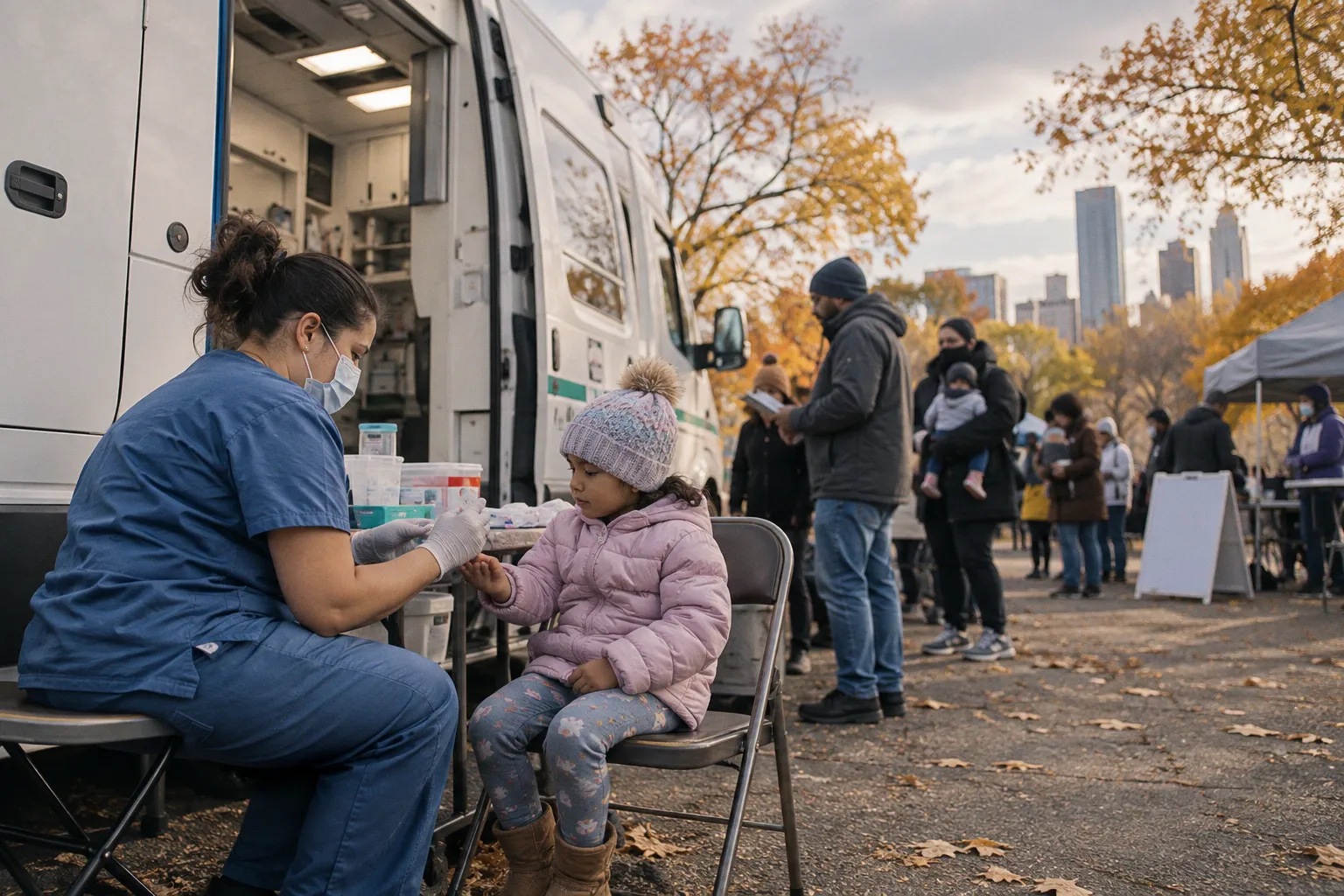
In the first twelve months of its Mobile Medical Unit, the City of Minneapolis quietly logged more than 4,100 patient interactions — a figure that, in the everyday language of clinic waiting rooms, translates into thousands of blood pressure cuffs wrapped around arms, hundreds of wounds cleaned and dressed, and a steady stream of unhoused and underserved neighbors routed, at last, into primary care. According to the city, the rolling clinic has become a working artery for residents who rarely, if ever, make it through a hospital's front doors.
How the Unit Finds Its Patients
The program's design is simple and stubbornly practical: bring the exam table to the sidewalk rather than wait for the patient to find the clinic. Outreach workers connect with people where they sleep, eat, and wait — under viaducts, at shelter drop-in points, along transit corridors — and from that first contact the team links individuals to ongoing treatment, behavioral health support, and the unglamorous logistics that make continuity of care possible: insurance paperwork, prescription refills, a ride to a specialist.
For frontline staff, the rhythm of a shift has changed. A nurse who once triaged the same return visitors in an emergency department now watches her schedule follow the city's geography — a Monday under one bridge, a Wednesday near a particular soup kitchen — and the caseload that follows is heavy on chronic illness, wound care, and the small interventions that keep a manageable problem from becoming a 3 a.m. ambulance call.
A Wider Pulse
Minneapolis is not the only place where charitable and military-linked medical teams are pushing care outward. In Dong Thap Province, a military-civilian hospital delegation treated more than 200 residents in a single Cambodian commune in one day, part of a planned week-long mission spanning four districts — care delivered alongside tributes to those who helped recover the remains of fallen Vietnamese volunteers. In Uganda, the Tubeere Balamu Health Camp drew thousands for free medical attention, and a Nigerian foundation reports reaching 5,000 vulnerable people with combined healthcare and humanitarian support.
The pattern is familiar to anyone who has worked a community shift: when the hospital cannot come to the neighborhood, the neighborhood builds its own doorway. What Minneapolis has shown over twelve months is that a sturdy, well-staffed van — parked in the right place, run by the right people — can keep opening that door.
What to Watch Next
The next test for the Mobile Medical Unit is sustainability. A first-year milestone captures the energy of a launch; the harder, quieter work is what happens when the novelty fades and the same patients still need a place to be seen. City officials have not yet released detailed plans for expansion, but the interaction count suggests demand is not the constraint — funding, staffing, and integration with hospital partners will be. For now, the unit keeps rolling, and the curb-side exam continues.