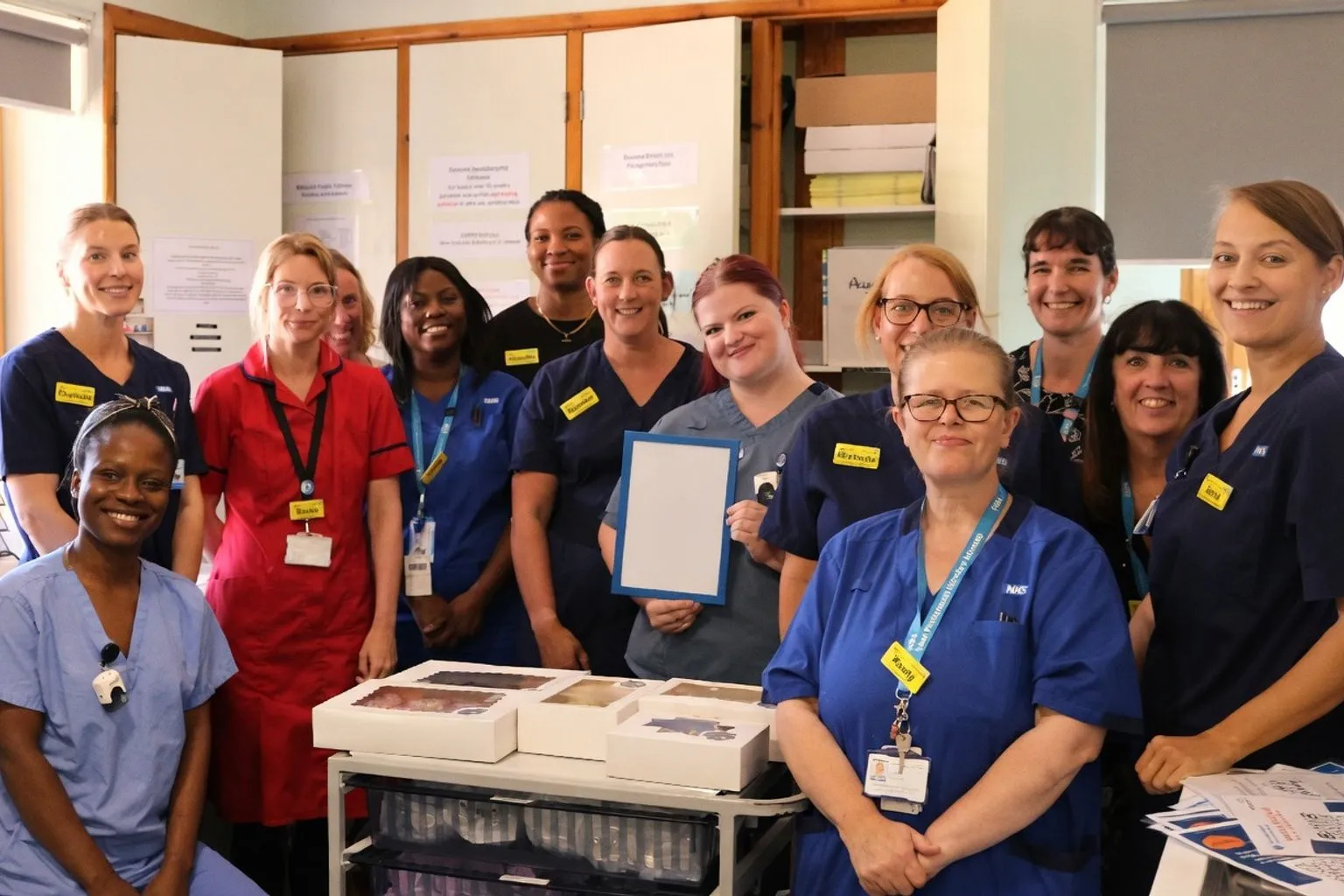
The donation from Helpful Hugs CIC adds a defined piece of family accommodation infrastructure to a unit where overnight parental presence is embedded in the pediatric care model.
Allocation and unit logistics
The funding was assembled from local businesses, organisations and individual donors across the region and directed to a single equipment category: lie-flat sleeper chairs for the children's ward. At roughly £1,142 per chair, the contribution sits within a narrow, reusable infrastructure line, funding equipment that supports round-the-clock parental presence rather than consumables or staffing budgets. NHS Highland Charity described the chairs as part of its wider remit to improve comfort, care and wellbeing for patients, families and staff across Highland and Argyll and Bute.
Helpful Hugs CIC was established by co-founders Alix and Joanne, with Alix drawing on her own experience of extended bedside stays at Raigmore alongside her daughter Hollie. That origin places the donation in a category of community-generated capital expenditure responding to a specifically named gap in parental accommodation on the unit.
Family-integrated care as the operating framework
Fiona, Senior Charge Nurse at the Highland Children's Unit, framed the chairs as an extension of the ward's family-integrated care approach. Under this model, parents are encouraged to remain at the bedside and participate in their child's care, which shifts overnight presence from limited on-site accommodation toward distributed, chair-based rest within the clinical area. The Senior Charge Nurse noted that the chairs are particularly relevant for mothers in the post-partum recovery window, when remaining close to a child overlaps with reduced mobility and elevated rest needs.
The ward already provides on-site shower facilities. The sleeper chairs extend that baseline by giving parents a defined place to rest without leaving the bedside, an arrangement that NHS Highland Charity credits with supporting parental bonding and continuous proximity throughout a hospital stay.
Capacity effect and what to track
With sixteen chairs deployed across the unit, the physical uplift is measurable and bounded by ward throughput. The financial model is one-off capital rather than recurring revenue, so utilisation will track directly against inpatient admissions and family demand rather than against a new operational cost line. The chairs remove the previous ceiling on how many family members can stay overnight at one time, lifting parental presence from a constrained resource to a routine option on the ward.
The data points worth monitoring: average daily parental overnight presence per occupied bed, any reported shift in length of stay for accompanied admissions, and whether NHS Highland Charity's broader donor pipeline continues to fund similar single-line infrastructure purchases at Raigmore or at other sites across Highland and Argyll and Bute.