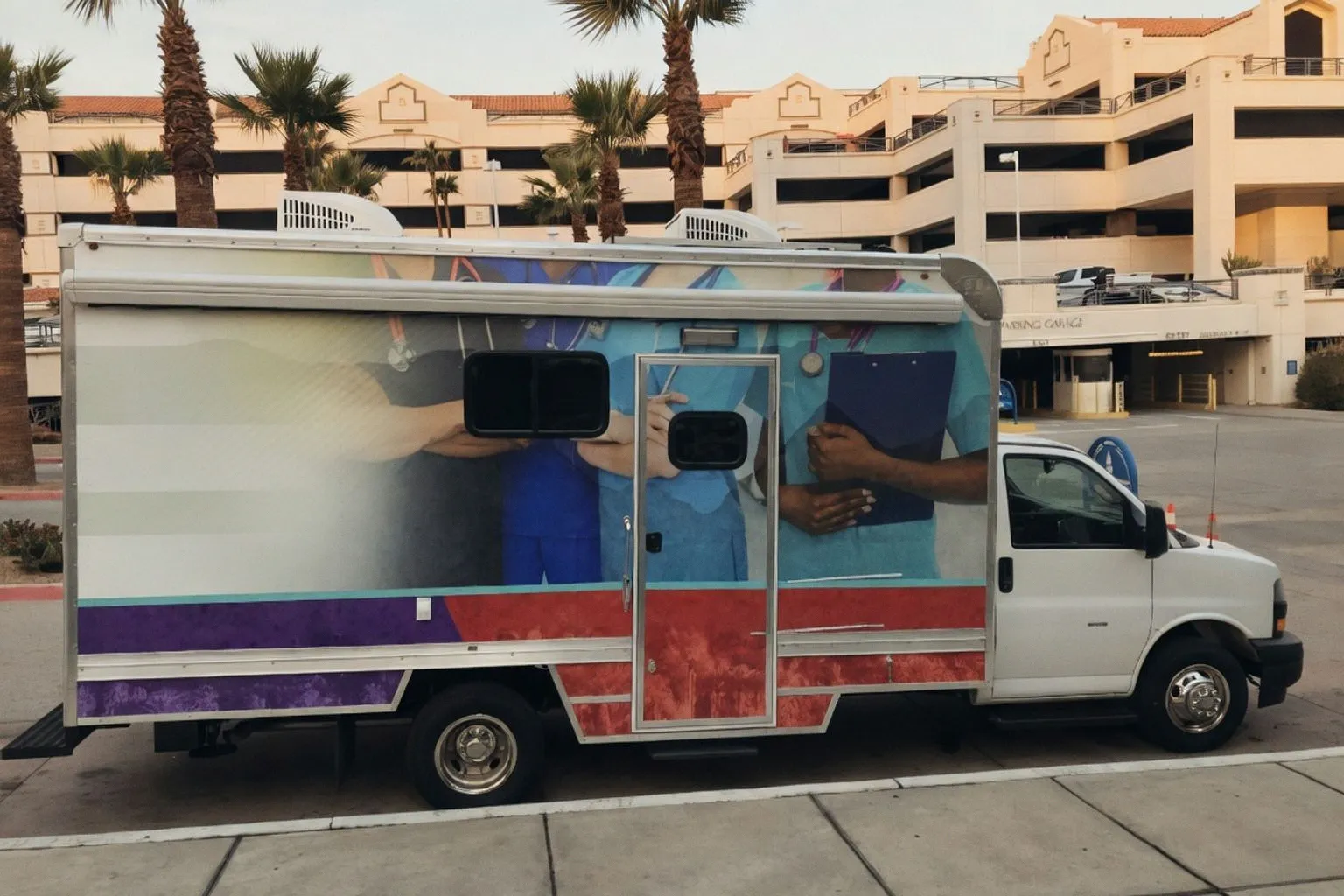
The wheels of a mobile clinic carry more than equipment — they carry the promise that a mammogram, a vaccination, a blood pressure check, or a simple conversation about chronic illness doesn't require a car, a day off work, or a long bus ride across the desert. As reported by Uken Report, the Desert Healthcare District & Foundation is now inviting licensed providers to step up and steer those wheels: the District has issued a Request for Proposals seeking a single operator to run its community mobile clinic program, a service that has quietly become one of the most visible lifelines for uninsured and underinsured residents of the Coachella Valley.
What the District is actually asking for
The program itself is small in footprint but heavy in impact. Launched in 2021, it operates two fully equipped mobile clinics, and the District wants a partner who can handle the entire chain — clinical care, logistics, scheduling, and the back-office paperwork that makes a rolling exam room feel less like a parking-lot pop-up and more like an extension of a traditional clinic. According to the District's announcement, the operator will be responsible for comprehensive operational, clinical, and administrative management of the mobile clinic program, with the goal of deepening access across the Valley's underserved neighborhoods.
Donna Craig, Interim CEO and Chief Program Officer, framed the work in grounded terms. What began as essential outreach to our community during the height of the COVID-19 pandemic has proven to be a highly effective tool that consistently removes barriers to quality healthcare for our residents, she said, underlining that the vans are no longer a stopgap but a permanent part of the District's strategy.
Where this fits in the bigger plan
The RFP doesn't stand alone. Earlier this year, the District's Board and staff adopted a new five-year strategic plan covering 2027–2031, repositioning the organization as a regional health system amplifier rather than a traditional grantmaker. Mobile clinics now sit squarely under Pillar 2 — Access and Awareness — which is essentially the District's pledge that geography, income, and immigration status shouldn't dictate whether someone gets seen by a clinician.
For frontline workers and partner organizations in the Valley, the practical question is who steps forward, how quickly, and whether the winning operator can preserve the street-level relationships that make a mobile clinic work — the promotoras who knock on doors, the community centers that lend their parking lots, the school nurses who flag families who haven't had a check-up in years. The deadline for submissions is Wednesday, October 14, 2026, at 11:59 PM, and the District has signaled that organizations should ensure all application requirements are met before that cutoff.
What to watch from here
A few threads will be worth following as the process unfolds. First, whether the selected provider keeps both vans in active rotation or consolidates routes, since capacity decisions will shape who actually gets reached. Second, how the new operator plans to coordinate with existing charity clinics and hospital outreach programs — redundancy wastes fuel, but gaps in coverage leave whole blocks behind. And finally, whether the District's expanded role under the 2027–2031 plan pulls more preventive services, including blood donation drives and chronic-disease screening, onto the mobile platform.
For now, the bigger story is structural: a charitable district is choosing to operate, not just fund. That shift matters most on the days a clinic van pulls up to a community center in Indio or Mecca, opens its doors, and turns a desert neighborhood into a place where care arrives, even when the road is long.