That is an access failure on a global scale, but it is also a distribution failure: resources, trained personnel, follow-up systems, and decision-making power are concentrated far from the communities that need them.
Into that gap comes the short-term medical mission: the week-long surgical brigade, the mobile clinic, the dental caravan, the volunteer team that arrives with donated supplies and a fixed departure date. Some of these missions provide meaningful care. Some relieve an immediate burden for patients who would otherwise wait indefinitely. But the existence of an urgent need does not make every intervention useful. A mission can deliver free surgery and still weaken the system around it. It can bring medication and still create a medication-supply failure. It can recruit highly qualified volunteers and still operate outside a safe scope of practice.
The uncomfortable question is not whether short-term missions ever help. They do. The question is whether they are designed to leave behind more capacity than disruption.
A surgical mission should not be judged only by what happens while the visiting team is in the operating room. Its real test begins after the team leaves.
The Disconnect Between Foreign Teams and Local Health Infrastructure
The standard operating picture of a short-term medical mission is tidy on paper: a roster of credentialed volunteers, a host institution, a patient list, a defined clinical scope, and a departure date. The reality is less orderly. A qualitative study of Haitian healthcare providers documented what happens when foreign teams operate independently of local services: the visiting group sets its own patient lists, chooses its own surgical days, brings its own drugs, and leaves local providers to absorb the friction.
That friction is not an abstract inconvenience. Local staff may have to rearrange routine clinics, make beds available, translate between teams, locate equipment, manage patients who were not part of the original plan, and respond to complications after the foreign clinicians have departed. A hospital can be grateful for donated equipment and still be unable to maintain it. A local surgeon can support a visiting team and still find that the mission has diverted staff, operating space, or patients from ongoing care.
The Haitian providers described another consequence that is harder to measure but easy to recognize: patients may come to believe that the visiting brigade represents the only meaningful source of specialized care. The team provides a visible burst of attention, then disappears. Local clinicians remain in place, but they are left to manage expectations created by an intervention they did not control. The goodwill generated during the brigade week can become cynicism during the fifty-one weeks that follow.
That is the bottleneck no brochure acknowledges. A forty-year gap in average life expectancy between low-income and high-income countries is not a problem a twelve-person team can compress, even one equipped with three operating days and a shipping container of supplies. The disparity is too structural. It involves referral networks, anesthesia services, blood availability, sterile processing, postoperative monitoring, transportation, financing, and the ability to return to the same patient when the first plan fails.
The mismatch becomes sharper when a brigade arrives in a region already served—however thinly—by local clinicians. The local team may then be expected to accommodate the visitors, defer to their schedule, or act as logistical support for a service model that will not remain after the mission ends. The implicit hierarchy is foreign team on top and local team underneath. It is built into the architecture of many STMMs, even when everyone involved describes the partnership as equal.
It does not have to be that way. A mission can begin with the host institution’s priorities rather than the sending organization’s preferred procedures. It can share control over the case list, determine in advance which patients require long-term follow-up, and treat local staff as clinical decision-makers rather than translators and fixers. But that requires a different understanding of the mission itself. The visiting team is no longer arriving to perform a predetermined number of procedures. It is entering an existing health system, with obligations to that system.
A useful distinction is between logistical readiness and institutional readiness. A team may have flights booked, instruments sterilized, and a volunteer roster complete while still lacking answers to basic questions:
- Who has authority to approve the clinical plan?
- Which local clinicians will participate in patient selection and consent?
- Where will a patient go if a complication develops after departure?
- Which medications and devices can the host facility continue to obtain?
- Who owns the medical record?
- What happens when the visiting team’s preferred treatment differs from local practice?
If those questions are unanswered, the mission is not ready. It is merely scheduled.
Scope of Practice and Credentialing Risks in Volunteer Settings
A narrative review of literature published between 2010 and 2024 identified four recurring ethical fault lines in short-term health volunteering: scope-of-practice violations, weak credential verification, structural power imbalances, and psychological strain on local health professionals. Each can appear to be a clinical problem, but each begins as a governance problem. The risk grows when a volunteer team operates in a regulatory environment it has not properly mapped.
Scope-of-practice violations are easy to identify in retrospect and difficult to prevent when no one has clear authority to stop the work. A nurse anesthetist accustomed to a U.S. academic medical center may find themselves in a district hospital performing procedures they would not be permitted to perform at home. That does not necessarily mean the volunteer is reckless. The host institution may urgently need the service. The patient may urgently need the operation. There may be no local official with the time, power, or confidence to challenge the visiting team.
Together, those circumstances can produce an avoidable clinical and legal risk with no documented chain of accountability on either side of the border. The volunteer assumes that local permission exists. The local institution assumes that the sending organization has verified the volunteer. The sending organization assumes that the host has defined the permitted role. Everyone proceeds, and the ambiguity is discovered only when a patient is harmed or a dispute arises.
Credential verification is the related oversight failure. A scoping review of short-term medical mission guidelines catalogued 27 distinct guideline documents in circulation as of 2017, yet compliance with widely accepted credentialing standards remains inconsistent. Local hosts, often dependent on the goodwill of the visiting group, may be reluctant to demand paperwork. Sending organizations—including churches, diaspora associations, specialty societies, and university global-health offices—may be reluctant to enforce standards that could disqualify a willing volunteer or postpone a long-planned trip.
A safe credentialing process is more than collecting a license number. It should establish what the volunteer is trained to do, what they have recently done, and what they are authorized to do in the host setting. A physician who routinely performs a particular operation at home is not automatically prepared to perform it in a facility with different anesthesia support, equipment, infection-control procedures, referral options, and postoperative monitoring. Competence is not portable in the same way as a passport.
The same applies to trainees and students. Their participation can be valuable when it is supervised, defined, and transparent to patients. It becomes dangerous when the urgency of the mission quietly turns education into substitution for qualified care. Patients should not have to infer who is treating them from a visitor’s badge or the language barrier in the room.
The recurring risks can be understood as a chain rather than as isolated errors:
1. The sending organization defines the mission around available volunteers. The clinical offer is shaped by who can travel, rather than by what the host system can safely support.
2. The host institution accepts a broad promise of help. Specific limits are left unresolved because refusing the mission may mean losing scarce resources.
3. The team encounters cases outside the original scope. Local staff are pressured to accommodate them because the patients have already travelled and the operating time is limited.
4. Consent becomes compressed. Interpretation, alternatives, risks, and follow-up plans are discussed under the pressure of a short schedule.
5. Responsibility becomes unclear after departure. The patient remains local; the clinical team does not.
The power imbalance is not corrected by good intentions. Visiting teams usually control the budget, schedule, case selection, supplies, and public narrative. Local clinicians may be paid a fraction of a volunteer’s travel and accommodation costs while carrying the practical burden of follow-up. They are positioned as assistants rather than partners, even when they know the patient population, the facility, and the limits of the referral network better than anyone on the visiting team.
That dynamic corrodes morale among the clinicians the mission is theoretically supporting. It can also condition local trainees to view their own careers as a waiting room for someone else’s arrival: wait for the next foreign specialist, the next shipment, the next operating week. A mission that repeatedly displaces local expertise does not build a workforce. It teaches the system to remain dependent.
The Hidden Burden on Local Providers and Fee-for-Service Systems
The most detailed picture of these unintended consequences comes from a study involving 72 interviews with stakeholders in rural Guatemala. The study confirmed what the Haiti research had suggested: short-term volunteer programs did improve access to free specialized care for a defined window. But the same programs produced complex, unintended consequences for local healthcare systems and for fee-for-service local doctors.
The point is not that local clinicians should be protected from competition at the expense of patients. Nor is it that every free service damages a local market. The point is that the local market is part of the care infrastructure. When a visiting team offers a procedure at no charge, it changes how patients make decisions, how local providers maintain their practices, and how communities understand the value of care that remains available after the visitors leave.
A free mission can disrupt local fee-for-service practices, particularly when it advertises a specialized procedure that local clinicians also provide. The disruption may involve postponed appointments, patients waiting for the next brigade, or a loss of confidence in local providers who charge fees because they must maintain staff, equipment, facilities, and follow-up services. The precise effect varies by community and by procedure. It should not be reduced to a fixed claim about one doctor losing a particular amount of income or a set period of patient relationships.
The market distortion does not end when the plane takes off. It can be compounded by the message the community receives: that surgical quality is a visiting commodity, not a local resource. Even a technically successful operation may reinforce that message if the mission does not introduce patients to the local clinicians who will manage them later.
Free care is not automatically sustainable care. In a fragile system, the price of a service includes what happens when the donor-funded version disappears.
This is where the language of voluntourism begins to fray. The act of providing free care in a setting where local clinicians provide similar care for a fee is not, in any neutral sense, an unalloyed good. It may be the right intervention in a genuine service gap. It may also undercut the local economy of care—the only economy that will still be present in the community twelve months later.
A responsible mission therefore asks questions that sound less heroic but are more useful:
- Is the service unavailable locally, or merely less convenient or more expensive?
- Could the mission subsidize local treatment instead of replacing it?
- Can local clinicians participate in assessment, surgery, and follow-up?
- Will the patients be referred back to a local provider whom they already know?
- Does the mission strengthen the facility’s ability to repeat the service?
- What happens to patients who are not selected for the visiting team’s limited schedule?
Patient selection is especially important. A mission built around a fixed number of operations may favor cases that can be completed quickly and documented easily. The patients with complex comorbidities, uncertain diagnoses, or difficult transport needs may be excluded, even though they have the greatest need. A local referral system can help prevent the mission from becoming a competition for the most photographable cases.
The same principle applies to community outreach. Outreach should not be a publicity device that generates a queue for the visiting team. It should connect patients to a durable local pathway: screening, diagnosis, treatment, rehabilitation, and referral where necessary. Without that pathway, outreach can create demand that the local system cannot meet.
Navigating Medication and Clinical Standards in Resource-Limited Areas
The pharmaceutical dimension of mission failure is often the most visible and the most easily documented. Mobile primary-care clinics operated by short-term missions frequently encounter a recurring set of pitfalls: visiting providers’ unfamiliarity with host-country practice standards, and local providers’ unfamiliarity with the foreign medications that arrive in the brigade’s suitcases. Both directions of confusion converge on the same outcome—medications prescribed, dispensed, or administered incorrectly, with the patient in the middle.
The pattern is recognizable. A team accustomed to a particular antibiotic regimen or combination analgesic brings a large supply of those drugs. The local nurse, who has been managing the same infection with the formulary available in the regional pharmacy, may not have a reference point for the dosage, contraindications, interactions, or pediatric formulation. The medication may be handed over without adequate documentation, or it may be used in a way that does not match host-country treatment guidance.
Neither side has to be careless for the system to become unsafe. A product name may differ. A concentration may be unfamiliar. Instructions may be translated incompletely. A volunteer may not know which medicines are already scarce or which alternatives are routinely used locally. A local provider may be expected to continue a treatment without access to the same supply once the mission departs.
This is why a medical mission supply failure is not simply a problem of forgetting gauze or shipping the wrong instrument. It can be a failure of compatibility between two systems. The relevant questions include:
| Planning question | Why it matters |
|---|---|
| Is the medication part of the host facility’s normal formulary? | Local staff are more likely to recognize, obtain, and safely continue treatment. |
| Are the strength, formulation, and dosing instructions documented in a usable format? | Familiarity with a drug class does not guarantee familiarity with a particular product. |
| Who will manage adverse reactions and treatment failure? | A short mission does not shorten the patient’s clinical course. |
| Can the supply be replenished locally? | A medicine that disappears after the brigade may create an avoidable interruption. |
| Does the donation comply with local rules and procurement practice? | Unregulated imports can create legal, storage, and quality-control problems. |
The compliance failure is upstream, in the decision of the sending organization to create a parallel supply chain rather than channel resources through the host country’s existing medical stores. Donations may be attractive because they are visible and easy to describe to supporters. Procurement support is less dramatic. It can nevertheless be more useful: funding local purchases, improving storage, supporting inventory management, or paying for the supplies that allow a trained local team to continue treatment.
Clinical standards also require translation beyond language. A visiting team may arrive with protocols developed for a high-resource hospital, where laboratory testing, imaging, blood products, specialist consultation, and emergency transport are available. Applying the same protocol in a rural clinic without those supports can create a false appearance of rigor. A guideline is not a substitute for the infrastructure that makes its assumptions true.
The safer approach is to adapt the clinical plan with local providers before patients are selected. That means agreeing on which cases can be treated safely, which must be referred, what equipment is genuinely available, and how complications will be handled. It also means recording the decision in a form the host team can use after the visitors leave. A handover is not complete because a document exists; it is complete when the receiving clinician can act on it.
Shifting Toward Collaborative Models for Long-Term Surgical Capacity
The literature does not end in pessimism, but it ends honestly. The same reviews that catalogue the failures also describe a smaller, more durable set of programs in which the visiting team functions as a capacity-building partner rather than a substitute workforce.
In these programs, volunteer credentials are verified against host-country requirements before deployment. Case selection is agreed jointly. Local clinicians perform procedures whenever possible, with the visiting team in a supervisory and teaching role. Follow-up is built into the mission design: a named local clinician receives the documentation, understands the postoperative plan, and has a route for contacting the visiting organization when complications exceed local capacity.
The difference is not merely philosophical. It changes the operational question from How many procedures did the mission complete? to What can the local service safely continue? That second question is harder to answer and less flattering to organizations that measure success through activity counts. It may produce fewer operations during the first visit. It may require money to be spent on training, maintenance, anesthesia, sterilization, records, or transport instead of on the visible parts of the trip.
Those investments are nevertheless closer to the actual problem. Surgical capacity depends on more than surgeons. It depends on nurses, anesthesia providers, technicians, blood banks, operating-room systems, infection prevention, referral transport, rehabilitation, and the ability to monitor a patient after discharge. A visiting specialist who teaches a local team but ignores the rest of that chain may transfer a procedure without transferring the conditions required to perform it safely.
The collaborative model also changes the relationship between volunteer and host. The local institution is not a venue. It is the authority that defines the service gap and sets the terms of participation. The foreign team brings expertise, but it does not bring ownership of the problem. The host team decides what should be taught, which cases are appropriate, and what support will remain useful after the visitors return home.
These principles were implicit in the 1978 WHO Primary Health Care Conference in Alma Ata and have been reasserted in later best-practice guidance. What remains uneven is implementation. A small but growing subset of sending organizations—academic medical centers, specialty societies, and some faith-based networks—are willing to fund longitudinal partnerships rather than annual marquee trips. They are also more willing to measure success through local capacity indicators instead of the number of procedures logged during brigade week.
A serious short-term medical mission plan should therefore include more than travel arrangements and a clinical roster. It should establish:
- a host-led assessment of the actual service gap;
- credentialing and scope-of-practice rules agreed before deployment;
- joint control over patient selection and consent;
- a medication and equipment plan compatible with local standards;
- a named postoperative and referral pathway;
- documentation that remains with the host facility;
- a process for reporting complications and learning from them;
- a longer-term commitment when the intervention depends on repeated training or maintenance.
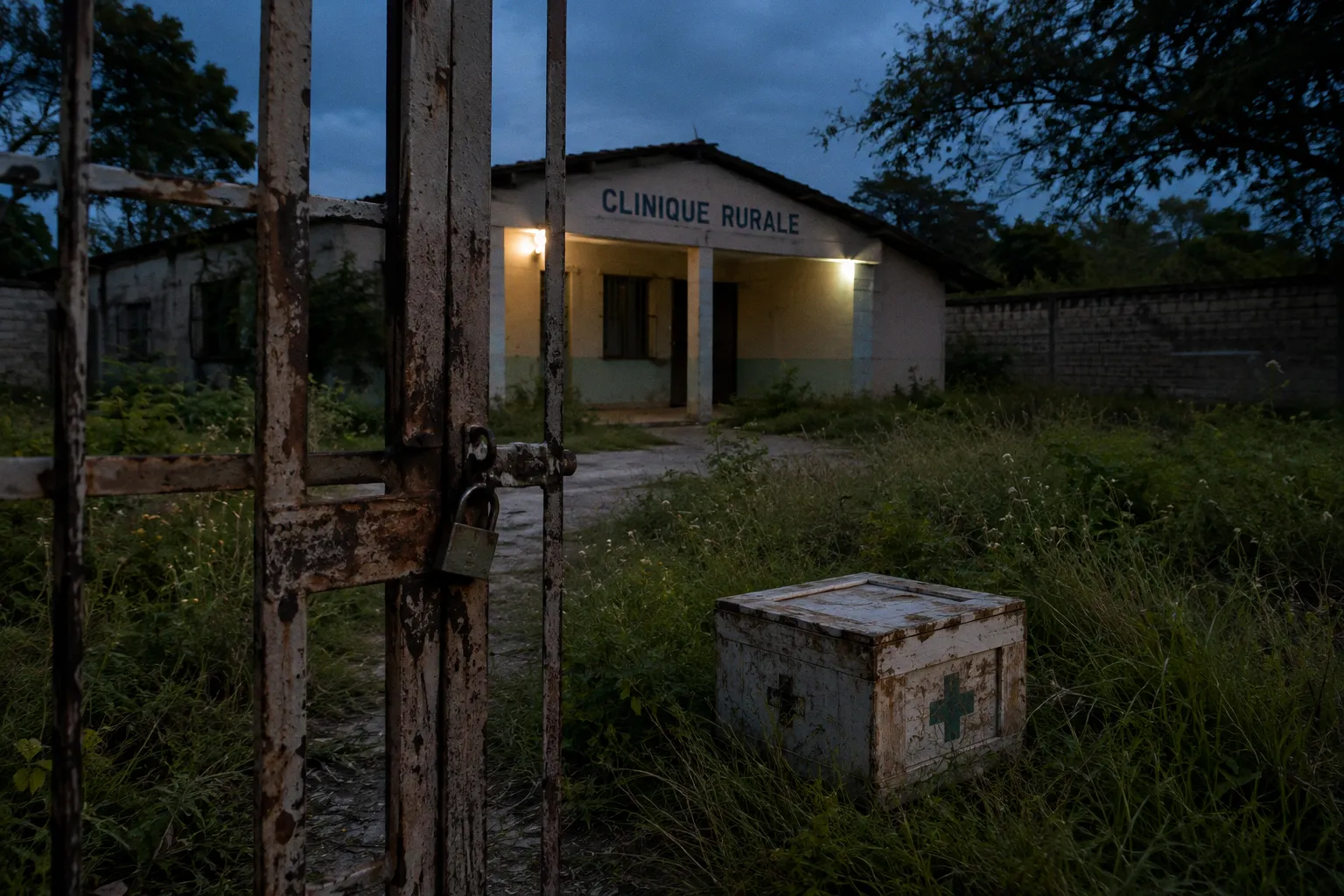
None of this eliminates uncertainty. It does eliminate some of the avoidable ambiguity that turns a well-intentioned mission into a stalled rural clinic with no clear owner after the visitors depart.
The financial incentive to mount a well-publicized mission trip is real: donor engagement, volunteer recruitment, social-media content, and institutional branding. The incentive to fund a quiet, multi-year capacity-building partnership is smaller, slower, and harder to photograph. That imbalance is not a minor communications problem. It shapes which interventions organizations choose and which outcomes they report.
Short-term medical mission mistakes are often described as failures of individual judgment: the wrong medication, the wrong patient, an inadequately checked credential, an incomplete handover. Those mistakes matter, but they are symptoms of a broader design error. The mission is treated as an event rather than as one intervention inside a living health system.
The gap in surgical care will not be closed by making volunteer teams more efficient at arriving, operating, and leaving. It will narrow only when missions stop treating local infrastructure as a backdrop and start treating it as the work. Until then, some brigades will continue to make the disparity easier to tolerate without making it smaller.