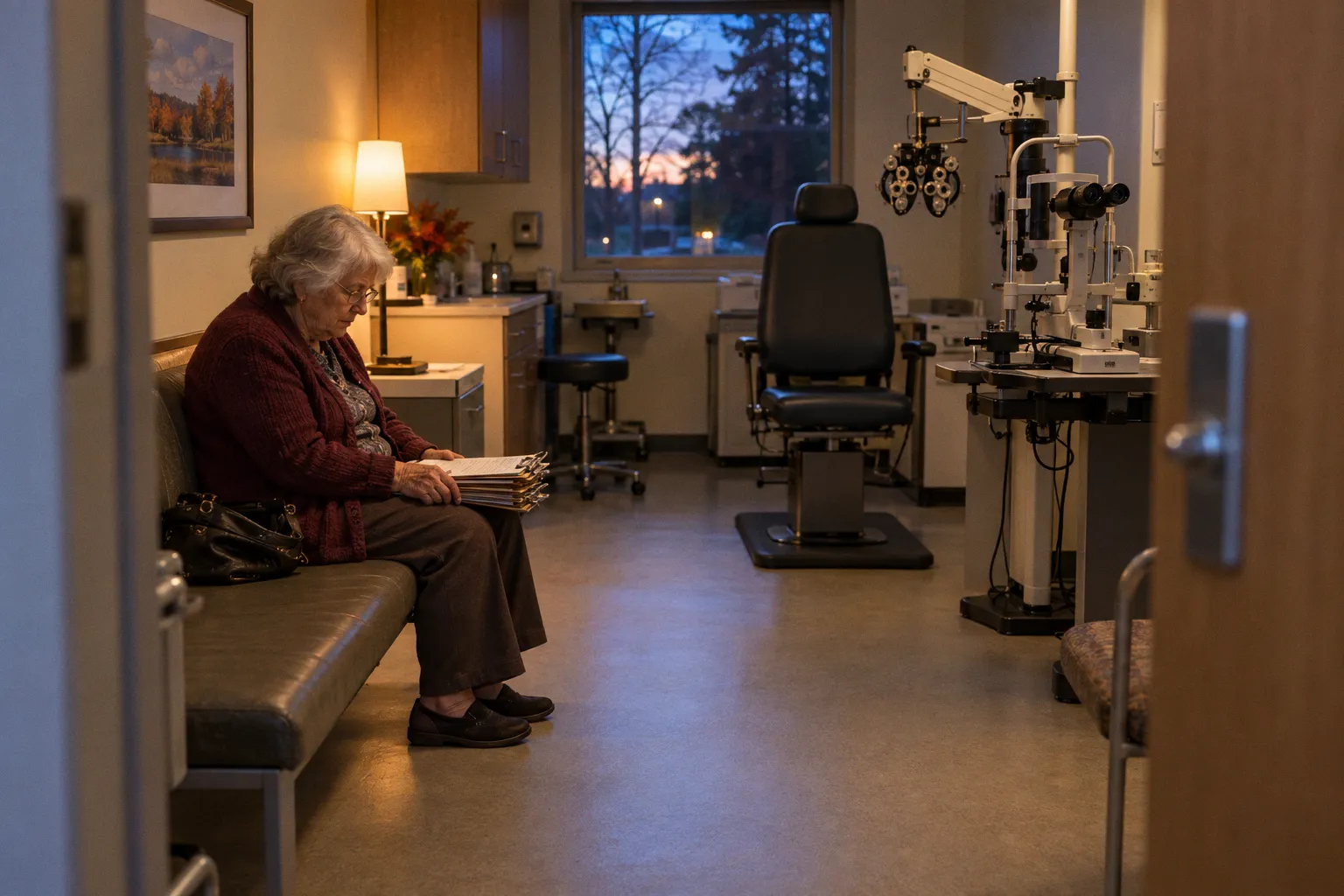
The scene repeats, with variations, in non-profit clinics across the country. It is the quiet arithmetic of a sector that has been asked to do more every year with the same thinning bench.
Approximately 20% of Americans live in rural communities. Only about 10% of practicing physicians work there — a long-standing disparity that shapes everything about how charitable healthcare is staffed. Volunteer programs exist, in part, to absorb that imbalance. They are not a luxury. They are the connective tissue that allows a small clinic to keep its doors open, its intake desk covered, and its patients seen on time. They also support the less visible work around clinical care: arranging rides, helping with community outreach, organizing blood-donation events, and making sure a patient does not disappear from the system after leaving the building.
And right now, those programs are quietly stalling.
The trouble is not that people have stopped wanting to help. The trouble is the way help is being asked for. Across the non-profit sector, 46.8% of leaders name recruiting sufficient volunteers with the right time and skills as a major operational challenge. In a rural setting, where one unfilled shift can ripple through a town's whole week, that number is not a line on a slide deck. It shows up as delayed appointments, exhausted staff, postponed outreach, and waiting rooms that begin to empty into the next county over.
This is a look at the specific ways medical volunteer recruitment falters at small non-profits — and the practical, on-the-ground adjustments that can pull a clinic back from the edge.
The rural staffing paradox: bridging the 20% gap
The disparity between where Americans live and where clinicians practice is one of the most documented features of the country's healthcare map, and one of the least forgiving for non-profit operators. When roughly one in five Americans lives in a rural community while only about one in ten practicing physicians works there, the volunteer base is not merely a supplement to professional care. It is part of the operating structure that allows professional care to function.
That distinction matters. A volunteer cannot replace a physician, nurse, laboratory professional, or other licensed clinician. But a volunteer can prevent those professionals from spending clinical time on tasks that do not require a license. In a small facility, the difference between a nurse preparing a patient for a visit and a nurse searching for a missing form is not theoretical. It is a few more minutes of attention, repeated throughout the day, when the clinic may already be working with very little slack.
Internationally, the math is no kinder. Global workforce estimates place the shortage of healthcare workers at roughly 2.4 million across 57 countries — a figure that underwrites much of the charitable-clinic ecosystem, from medical missions to stateside volunteer pipelines. Rural communities feel the shortfall first, and they have been feeling it for years. A clinic may have a dependable physician one day a week, a visiting specialist once a month, and a rotating group of volunteers trying to keep the rest of the operation coherent between those appointments.
Community outreach makes the staffing problem even more visible. A clinic's work is not limited to the examination room. Someone has to explain where services are available, help residents understand appointment procedures, distribute information through churches and community centers, coordinate transportation, and maintain relationships with local organizations. Blood-donation campaigns bring the same logistical demands. A drive needs people to greet donors, direct traffic, prepare registration materials, keep the waiting area orderly, and follow up with community partners. None of those jobs is a substitute for trained medical care. All of them determine whether trained medical care can be delivered efficiently.
In rural healthcare, the volunteer is not decoration around the professional — the volunteer is what makes the professional's day possible.
Intake greeters, supply runners, transportation drivers, post-visit follow-up callers, blood-drive hosts, and outreach assistants are not decorative positions. They are the roles that free a nurse to nurse and allow a clinician to focus on the patient in front of them. For small non-profits, the practical consequence is that the volunteer coordinator's job is closer to logistics than to fundraising. Every successful recruitment is one more shift covered, one more patient greeted, one more donor guided through a community blood drive, and one more clinician able to stay in the room instead of pulling double duty at the front desk.
The mistake is to treat these roles as interchangeable labor. They are not. A person who is excellent at transportation coordination may be uncomfortable at reception. Someone with clinical experience may want a clearly bounded patient-support role rather than a general assignment. A college student may be willing to help with outreach but unavailable for weekday clinic hours. Recruitment improves when the program stops asking for a generic volunteer and starts offering a specific way to contribute.
Match the ask to the local workforce
Rural volunteer programs often recruit from the same circles repeatedly: congregations, hospital auxiliaries, civic clubs, school groups, and word of mouth. Those relationships are valuable, but they can also create a narrow pipeline. The same dependable older adults are asked to cover the clinic, the food pantry, the blood drive, and the community fundraiser. When the program needs more help, it often sends the same broad request to the same people.
A stronger approach is to map the work before advertising it. A clinic might need:
- A regular weekday greeter who can learn the intake flow and recognize when a patient needs staff assistance.
- A driver or ride coordinator who understands the geography of the service area.
- A volunteer to help prepare materials for outreach visits and blood-donation events.
- A person with administrative experience who can organize supplies, forms, and reminder calls.
- A medically experienced volunteer whose role is defined by the clinic's credentialing and supervision process.
- A short-term group for a community event, with a supervisor and a limited list of tasks.
That level of detail does not make the invitation less welcoming. It makes it credible. People are more likely to offer their time when they can picture the shift, understand the boundaries, and see how their contribution fits the clinic's work.
Why overly complex intake processes deter skilled volunteers
Of all the ways a rural clinic's volunteer pipeline can stall, the most preventable is also the most common. One of the most cited recruitment mistakes in the field is building an overly complicated application process: excessive paperwork, redundant clearances, scheduling forms that arrive before the volunteer has even met the team, and long periods of silence between each step. The willing candidate is asked to commit hours of an evening before anyone has explained the role or thanked them for showing up.
This is the friction point where programs lose people. A retired phlebotomist who has spent decades in a hospital may understand medical work perfectly well; she may still be discouraged by an onboarding packet that treats every volunteer as a potential clinical employee. A pre-med student who could give the clinic several reliable hours a week may drift off when the first screening conversation is scheduled weeks away. A local resident who wants to help at a blood drive may never return after being sent a generic form that does not explain the event, the shift length, or the tasks involved.
The work itself is not always the barrier. The way the work is offered is.
There is a legitimate reason for screening. Healthcare settings involve privacy, safety, infection control, safeguarding, and access to vulnerable people. A clinic should not eliminate necessary checks simply to make recruitment look easier. The better question is whether every requirement is connected to the role and presented at the right stage.
A volunteer who will help direct donors at a public blood drive does not need the same intake path as someone seeking a role that could involve access to protected health information. A person transporting supplies does not need to complete the same process as someone whose duties require clinical credentials. The program should be careful without making every candidate carry the administrative burden of the most sensitive position.
A few adjustments show up repeatedly in clinics that have eased their intake flow:
- Front-load the relationship, not the paperwork. A brief welcome call or coffee meeting that introduces the coordinator, the space, and the role can answer questions before a candidate faces a long form. It also gives the clinic an early opportunity to explain which requirements are essential.
- Split the application into stages. A short initial interest form, followed by role-specific screening and a single credentialing step where needed, is easier to navigate than one monolithic packet.
- Name the role precisely. “Volunteer” is vague; “Tuesday afternoon intake greeter, four-hour shift, no clinical duties” is not. “Community blood-drive host” tells a prospective volunteer more than “health outreach assistant.”
- Separate universal requirements from role-specific ones. Orientation, emergency procedures, and confidentiality expectations may apply broadly. Clinical authorization, background checks, or additional training may depend on the assignment.
- Give candidates a visible next step. A confirmation email should say who will follow up, what the next conversation covers, and how long the process is expected to take.
- Offer more than one route into the organization. A person may begin at an outreach event, help with a blood drive, or join a supply-preparation shift before deciding whether a recurring clinic role is a fit.
- Acknowledge the donor's time. The first response does not need to be elaborate. It needs to arrive promptly and demonstrate that the clinic knows a volunteer has already made a commitment by expressing interest.
The 46.8% who report recruitment as a top challenge are not, by and large, reporting that people do not want to help. They are reporting that the help being offered does not fit through the door the program has built.
Do not confuse rigor with repetition
A common nonprofit medical staffing mistake is to add another form whenever something goes wrong. A missed orientation produces a new reminder form. A scheduling error produces another confirmation email. A privacy concern produces a policy document that volunteers must acknowledge in several places. Soon, the process contains layers of institutional memory but very little sense of proportion.
The remedy is a periodic review of the volunteer journey from the candidate's side. How many times does the same information get entered? Which documents are read, and which are simply signed? At what point does a candidate learn the actual schedule? How quickly can the coordinator tell whether someone is suited to reception, outreach, transportation, or a supervised clinical-support role?
This review is not an argument for casual management. It is an argument for putting effort where it protects patients and supports volunteers. Clear expectations, appropriate screening, and careful orientation are signs of a serious program. Redundant bureaucracy is not.
Navigating regulatory boundaries for uncredentialed support
Volunteers at a healthcare non-profit do not automatically gain the authority to perform clinical work simply because they are willing, experienced, or supervised informally. At the same time, it is too broad to describe every uncredentialed volunteer as categorically barred from any task involving clinical materials, records, or patient contact. What a volunteer may do depends on the role, applicable law and policy, the person's training and credentials, the clinic's authorization, and the level of supervision available.
Some tasks should remain with appropriately licensed or otherwise authorized staff. Other tasks may be assigned to volunteers when they have received the required training, have been formally authorized by the organization, and work under suitable oversight. The boundary must be defined by the clinic rather than guessed by the volunteer on a busy morning.
Privacy rules, infection-control requirements, workplace safety standards, and professional-scope regulations all matter. A volunteer should not access confidential medical records merely because a computer is unlocked. A volunteer should not administer medication or assist with a procedure simply because a staff member is momentarily occupied. Handling biowaste or other hazardous materials may require specific training, protective equipment, authorization, and supervision; in some settings it may not be an appropriate volunteer assignment at all.
The responsible message is therefore not an absolute “no” to every task. It is a clear explanation of the conditions under which a task is allowed — and the conditions under which it is not.
| Task area | Credentialed or authorized staff | Volunteers, where permitted by policy |
|---|---|---|
| Patient triage and clinical assessment | Performed within professional scope and applicable policy | Generally not assigned unless the volunteer has the required credentials, authorization, and supervision |
| Handling or disposing of biowaste | Performed by staff or trained personnel according to safety procedures | Only when the clinic permits it and the volunteer has appropriate training, authorization, equipment, and oversight; otherwise assigned to staff |
| Accessing confidential medical records | Access controlled according to role and privacy requirements | Limited access may be possible for a defined administrative role after training and authorization; casual or unrestricted access is not appropriate |
| Administering medications or assisting with clinical procedures | Performed by properly licensed or authorized personnel under applicable rules | Not assigned unless the volunteer's credentials, authorization, training, and direct supervision satisfy the clinic's requirements |
| Wayfinding, intake greeting, and patient transport | Staff may perform or supervise | Often appropriate after orientation, with escalation to staff when clinical concerns arise |
| Restocking supplies and clerical support | Staff may perform or oversee | Often appropriate after orientation, with clear rules about restricted supplies and records |
| Post-visit follow-up calls | Clinical staff handle clinical advice and assessment | Non-clinical reminders or service-navigation calls may be appropriate after training and with a clear script and escalation process |
The middle rows of that table are where many successful rural volunteer programs live. A volunteer who knows the building, the providers, and the rhythm of the day is not a small asset. She is the person who notices that a patient has been waiting too long, that a wheelchair needs attention, that a donor is unsure where to register, or that an outreach packet has been sent to the wrong community partner. Those observations do not authorize her to diagnose, advise, or intervene clinically. They do allow her to bring the issue to the right staff member before it becomes a larger problem.
The clinic's job is to make these boundaries clear at orientation, not as a list of refusals but as a map of where the volunteer can be most useful. Training should cover confidentiality, infection prevention, emergency escalation, respectful communication, and the difference between observing a concern and acting on it. A volunteer who answers follow-up calls needs to know which questions can be handled from an approved script and which must be transferred to clinical staff. Someone helping at a blood-donation event needs to know where registration ends and clinical decision-making begins.
A simple escalation rule is often more valuable than a thick policy manual: if the question involves diagnosis, treatment, medication, a change in symptoms, a privacy concern, or an immediate safety issue, the volunteer brings in authorized staff. That rule protects patients without making volunteers feel that their only permitted contribution is to stand out of the way.
Good volunteer management does not erase the boundary between service and clinical practice. It makes the boundary useful, visible, and safe.
Mitigating burnout in aging volunteer cohorts
The demographic portrait of the rural volunteer is striking, and it is something the sector can no longer afford to ignore. A study of rural volunteer pools in Michigan found that the majority of rural volunteers were over the age of 70, women, married, and affiliated with multiple community agencies. In other words, many of the people holding rural non-profit healthcare together are also the people most at risk of burning out, becoming ill, or being asked to give one more shift than they have left.
This is not a flaw in the volunteers. It is the predictable outcome of a recruitment system that has, for years, drawn from a narrow pool of reliable, civic-minded older adults. When that pool is also serving the food bank, the hospital auxiliary, the library board, the local 4-H chapter, and community blood drives, the same small group of names keeps appearing on every sign-up sheet. Their dependability can conceal the fragility of the system.
A clinic may say that its volunteer program is stable because the shifts are technically covered. But if the same people are filling every gap, stability is being purchased with exhaustion. The first sign may not be an explicit resignation. It may be a volunteer who stops accepting late requests, moves from two shifts a week to one, or becomes less willing to take on unfamiliar duties. A program that notices only when someone leaves has already missed several chances to retain them.
Three practical interventions can ease that pressure:
- Audit the same-name problem. Pull several months of sign-up sheets and look at how many shifts are carried by the most active volunteers. If the answer is uncomfortable, that is data, not failure.
- Build a second tier. High school service clubs, community college allied-health programs, local employers, faith communities, and civic organizations can bring in younger and more diverse cohorts. They need a specific invitation, a named supervisor, and a role that fits their schedule.
- Rotate roles intentionally. A volunteer who has driven patients for years may welcome a shift answering phones, preparing outreach materials, or greeting donors at a blood drive. Variety can extend a volunteer's working life more reliably than recognition events alone.
- Design for physical sustainability. Seating, shorter shifts, predictable breaks, accessible parking, and clear lifting policies are not special treatment. They are basic retention infrastructure.
- Stop rewarding overextension. The person who always agrees to cover a cancellation should not become the program's default emergency system. Appreciation is useful, but it does not replace rest or a broader recruitment base.
- Make departure reversible. A volunteer who needs to step away for health, family, or seasonal work should be able to leave without feeling that the organization has closed the door behind them.
The Michigan study's authors flagged the burnout risk explicitly. The clinics that hold onto older volunteers longest are not necessarily the ones that ask the most of them. They are the ones that ask thoughtfully, plan for absences, and treat changing capacity as a normal part of participation rather than a failure of commitment.
Recruiting younger volunteers without turning them into free labor
The answer to an aging volunteer cohort is not to replace older volunteers with students and then give the students every unappealing task. That approach may produce short-term numbers and long-term resentment. Younger volunteers need a real orientation, a defined contribution, and a reason to understand the clinic's mission beyond the accumulation of service hours.
A community college student in an allied-health program may value exposure to patient navigation, outreach planning, or the operational side of a charitable clinic. A high school group may be well suited to preparing blood-drive materials, assembling information packets, or helping with wayfinding under supervision. A local employer may be able to provide a team for a Saturday outreach event. None of these groups should be placed in a clinical role simply because the clinic is understaffed.
The point is not to make every assignment educational or promotional. It is to make the exchange honest. The clinic receives reliable help; the volunteer receives a meaningful, bounded role and a clear understanding of the work. That is a better foundation for retention than a vague promise to “make a difference.”
Modernizing scheduling to retain clinical talent
The final pitfall is the one most often described as administrative, and therefore easiest to underfund. Rural non-profits are, on the whole, still running scheduling systems that would not be out of place in a parish bulletin from a decade ago: paper sign-up sheets, group text threads, and a coordinator's personal spreadsheet that lives on a laptop. When a volunteer cancels early in the morning, the message ricochets until someone — usually the coordinator — picks up the phone.
This is not a nostalgia problem. It is a retention problem.
A skilled medical volunteer may have a demanding professional schedule, family responsibilities, or limited windows in which to contribute. If that person signs up for a Saturday shift and arrives to find the front desk unstaffed because of a miscommunication, the clinic has not merely lost a few hours of help. It has shown the volunteer that their expertise and time are not being managed carefully. A volunteer scheduled for a role they did not agree to may quietly drift away. A person who cannot remember which Sunday they are assigned may stop signing up altogether.
Scheduling also affects community outreach. If the clinic announces a blood drive but does not assign enough people to registration, donor navigation, and cleanup, clinical staff end up absorbing the gap. If outreach volunteers receive a last-minute location change through a long group text, some will miss the event. A scheduling system is therefore part of service quality, not just an administrative convenience.
The fix is unglamorous and overdue:
- Use a shared sign-up system. Volunteers should be able to view open shifts, confirm their assignments, and report availability from a phone or another accessible device. The tool can be simple; the important feature is a shared source of truth.
- Separate roles on the calendar. A clinical-support shift, a reception shift, a transportation assignment, and a blood-drive position should not appear as one generic category. Clear labels prevent people from arriving with the wrong expectations.
- Send reminders. Automated notices before a shift reduce the number of preventable absences and move the reminder burden away from the coordinator's personal phone.
- Keep a talent pool file. When a clinical volunteer cannot be placed this month, capture their credentials, preferred role, and availability for the next opportunity. Do this securely and only to the extent needed for the program.
- Create a cancellation protocol. Decide in advance who receives a cancellation, which roles must be backfilled first, and when the clinic should reduce or redesign a service rather than chase an impossible replacement.
- Track why volunteers leave. A short exit touchpoint — even a handwritten note asking what would have brought someone back — can produce more useful information than a general satisfaction survey.
- Protect volunteer privacy. Scheduling tools should not expose unnecessary personal or health information. Convenience is not a reason to distribute private details through a group message.
- Make recurring commitments genuinely recurring. If a volunteer signs up for the first Tuesday of each month, the system should preserve that arrangement unless the person changes it. Predictability is one of the simplest forms of respect.
The clinics that modernize their scheduling are not necessarily the clinics with the largest budgets. They are the clinics whose coordinators recognize that an afternoon spent setting up a workable scheduling tool is cheaper than an afternoon spent making fifteen calls to fill one shift. More importantly, the tool creates institutional memory. When a coordinator leaves, the schedule should not disappear with the spreadsheet on her laptop.
A volunteer coordinator cannot afford to spend three weeks onboarding a retiree who arrived ready to help on a Tuesday morning.
Clinical talent requires a different invitation
Recruiting skilled medical volunteers deserves particular care. A licensed professional may be willing to provide clinical service, but that willingness does not mean the clinic can place them immediately. Credentials may need to be verified. The permitted scope of work must be clear. The volunteer must understand the documentation process, supervision arrangements, referral boundaries, and what happens when a patient needs care beyond the clinic's capacity.
That process can be rigorous without being opaque. The candidate should know which documents are needed, who reviews them, and what kind of assignment is realistic. If the clinic cannot use a volunteer's specialty at present, it should say so rather than place that person in a generic role and hope a suitable opening appears later.
Clinical volunteers also need dependable operational support. They should not arrive for a shift without access to the equipment, forms, interpreter support, or administrative assistance the assignment requires. The more specialized the volunteer's contribution, the more costly it is to waste their time through poor preparation.
Retention begins before the first shift. It begins when the organization demonstrates that it understands the difference between recruiting a person and designing a role in which that person can work safely and effectively.
What it adds up to
The 46.8% of non-profit leaders struggling to recruit skilled volunteers are not failing because their missions are unclear. They are failing at the seams: the onboarding form that should begin with a conversation, the role description that should have a name, the safety rule that should be explained rather than implied, and the schedule that should be a shared tool rather than a guess.
Each of those seams is small. Together, they are the difference between a clinic that holds its neighborhood together and one that hands its patients off to the next county.
The same is true of community outreach and blood donation. A campaign can have a worthy purpose and still lose momentum if residents do not know where to go, volunteers do not know what they are responsible for, or staff have to improvise every detail. Recruitment is not separate from outreach. It is the infrastructure that makes outreach possible.
The fixes are not glamorous. They are not grant-funded moonshots. They are the patient, daily work of treating a volunteer's time with the same respect a clinician would treat a patient's time — and of building the small systems that make that respect visible.
Rural clinics have always been good at this kind of quiet intervention. What is new is the urgency. The physician gap is not closing on its own, and a volunteer program cannot be sustained by asking the same dependable people to carry more. The pipeline can be widened, simplified, and kept warm. But that requires more than another recruitment appeal. It requires a clinic to decide exactly what help it needs, what volunteers are authorized to do, how they will be supported, and why returning should feel worthwhile.
The people who depend on that work have been waiting long enough.