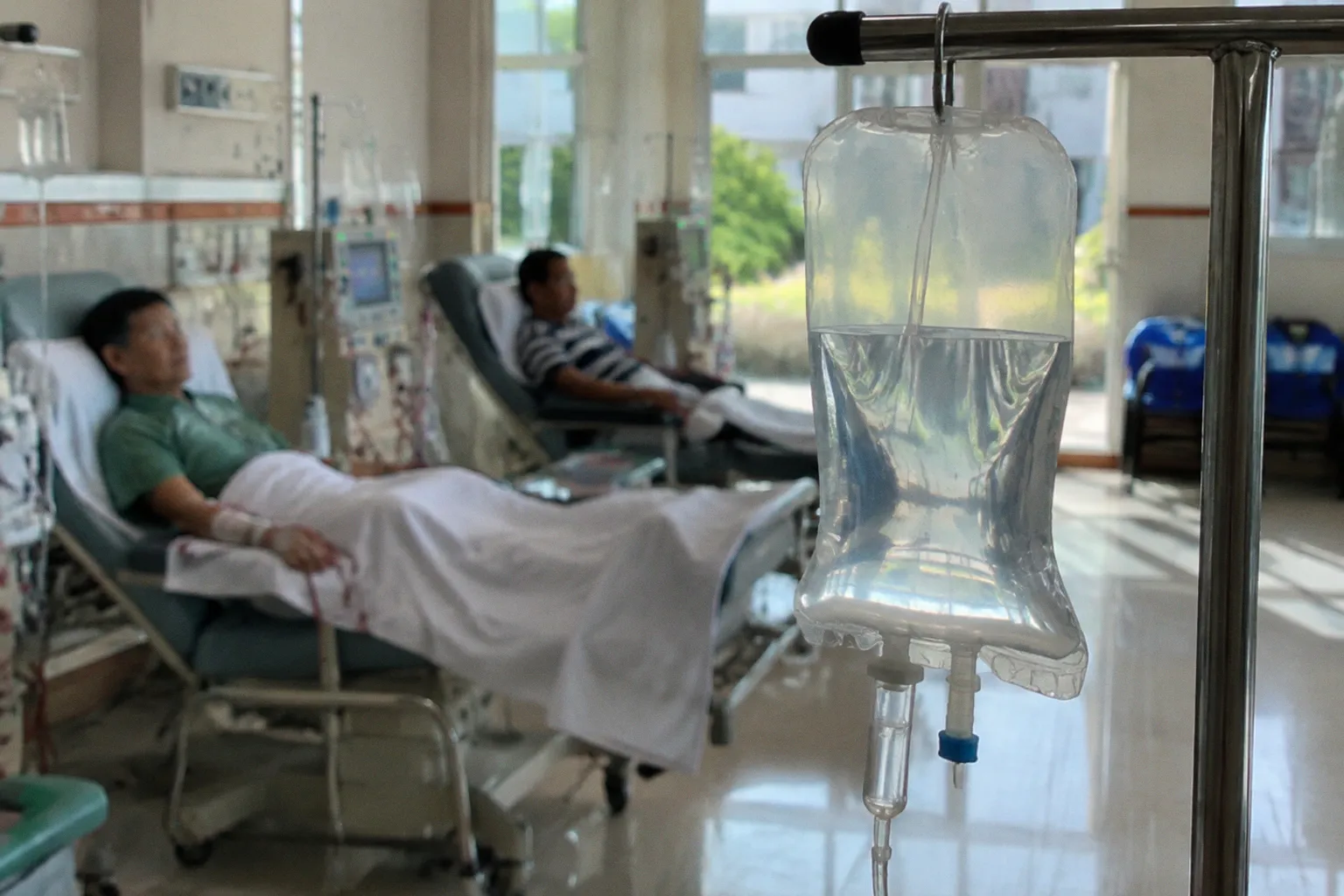
For patients who walk through the doors of a charity hospital with end-stage renal disease, the path to a free or heavily subsidized dialysis seat is paved with paperwork, federal acronyms, and the steady hand of a medical social worker who knows which doors to knock on first. The rules that govern this path — written into tax code, layered into grant guidelines, enforced by clinical admission standards — shape whether a treatment stays accessible or quietly slips out of reach.
Behind every dialysis shift lies a quiet machinery of policy, and the people who understand it best rarely sit in boardrooms. They sit in fluorescent-lit social work offices, translating eligibility language into something a working grandmother can act on before her next appointment.
Navigating Financial Assistance Policies Under Section 501(r)
The foundation of charitable dialysis access in the United States rests on a single clause that most patients will never read: Section 501(r)(4) of the Internal Revenue Code. Under this provision, tax-exempt non-profit hospitals are legally required to establish, maintain, and publicize a written Financial Assistance Policy — a document that lays out, in plain terms, who qualifies for charity care, what discounts are available, and how to apply.
For a patient standing at the admissions desk, this translates into something concrete: the hospital must tell them, up front, that financial help exists. The policy has to be visible. It has to be explained in the language the patient speaks. And it has to outline a process that doesn't require a law degree to navigate.
In practice, this is where the groundwork begins. A well-drafted FAP doesn't just sit on a website. It gets translated into brochures in waiting rooms, into scripts for front-desk staff, into the conversation a financial counselor has with a family before treatment starts. The IRS requirement exists precisely because too many non-profit hospitals once assumed patients would simply know to ask — and too many patients, overwhelmed by diagnosis, never did.
The FAP must also describe what actions the hospital may take if a bill goes unpaid — including any steps related to collections. Whether the policy includes a formal mechanism for patients to dispute a denied charity care application varies from one institution to the next. Some hospitals build in a structured review or reconsideration process; others rely on general billing dispute procedures. The key takeaway for patients: read your hospital's FAP carefully, and ask specifically what options exist if your application is turned down. A denial is not necessarily the final word, but the path to challenging it depends on the language of that particular hospital's policy.
Income Thresholds and Means-Testing for Dialysis Subsidies
Charity hospital dialysis subsidies are not handed out uniformly. They are distributed through a means-testing structure — and the thresholds that determine who qualifies are set by each individual hospital in its own Financial Assistance Policy.
There is no single federal income ceiling that applies across the board. What exists instead is a set of widely adopted benchmarks. Many non-profit hospital systems tie their subsidy tiers to the Federal Poverty Level, a figure updated annually by the Department of Health and Human Services, and a common structure looks roughly like this:
| Household Income (% of FPL) | Typical Subsidy Level |
|---|---|
| At or below 200% | Full charity care (100% coverage) |
| 201%–300% | Partial discount on a sliding scale |
| 301%–400% | Reduced fee schedule |
| Above 400% | Standard rates; financial assistance unlikely |
These figures are illustrative, not statutory. A patient at or below 200% of the Federal Poverty Level — for a single individual, a remarkably modest income ceiling — will often qualify for full coverage of medically necessary dialysis treatments, but the exact cutoff is written into each hospital's own policy. Some institutions set their charity-care bar lower; others extend partial discounts further up the income ladder. The point is not to memorize a national rule, because one doesn't exist in this form — the point is to read the specific FAP at the facility where treatment will happen.
Means-testing is not a wall. It's a filter — and the difference between a patient clearing it and a patient being turned away often comes down to one well-prepared conversation with the right staff member.
International charitable models work in a comparable tiered fashion. The National Kidney Foundation frameworks in Singapore and Malaysia, for instance, organize subsidies across multiple income brackets, with a Hardcore Poor tier providing fully free dialysis for eligible low-income patients. The principle holds across borders: financial eligibility determines the percentage of cost absorbed by the charitable institution rather than the patient.
The practical advice for anyone navigating this process is simple: never assume you don't qualify based on general thresholds alone. Ask the admissions or financial counseling office at your specific hospital for a copy of their FAP, look at the income brackets they use, and apply even if your household income falls near the upper boundary. Eligibility decisions frequently involve more nuance than a single number on a pay stub.
The Role of Medical Social Workers in Grant Applications
Here is where the system reveals its most human dimension. The American Kidney Fund, one of the largest charitable grant providers for dialysis patients in the United States, does not accept applications directly from patients. The application must be submitted through a dialysis center social worker. This is not a technicality — it is a deliberate design choice.
A medical social worker carries the context that a form alone cannot capture. They know the patient's transportation barriers, their caregiver situation, their housing instability, their medication adherence. They know whether the patient has private insurance that covers part of the treatment or whether they have already maxed out a state Medicaid benefit. They write the narrative that turns a stack of pay stubs into a case for assistance.
This is also why social worker caseloads matter. A social worker managing 200 patients cannot give any single application the attention it may need. When community clinics invest in lower social worker-to-patient ratios, the rate of successful grant approvals tends to climb — and with it, the resilience of the patient population that depends on those grants.
For patients, the practical advice is straightforward: find the social worker attached to your dialysis unit. Bring every document you have — tax returns, pay stubs, denial letters, utility bills — and ask specifically about charitable grants, hospital FAP enrollment, and any state-level kidney programs. The work that gets done in that first meeting often determines the financial trajectory of the next several years.
Clinical Admission Standards and Physical Eligibility Criteria
Financial qualification is only one gate. Before a patient settles into the dialysis chair, the clinical admission standards of the receiving unit take over — and these criteria are surprisingly specific.
Most outpatient hemodialysis units, including those operated by non-profit and charity-affiliated centers, require that incoming patients demonstrate hemodynamic stability — meaning their blood pressure and circulation can tolerate the fluid shifts that come with a dialysis session without collapsing into a medical emergency. A patient in active cardiac failure or with uncontrolled hypertension may need stabilization in a hospital setting before they can be safely accepted into a community dialysis chair.
Infectious disease status matters too. Many standard dialysis units require negative Hepatitis B status before admission, because the dialysis environment — with its shared equipment, repeated vascular access, and proximity of patients over hours-long sessions — carries real transmission risk. Patients who test positive for Hepatitis B are typically routed to isolated units with separate machines and dedicated staff.
Then there is the physical tolerance test: can the patient recline to at least a 30-degree angle and remain there for the duration of a four-hour treatment? For patients with severe orthopnea, advanced respiratory disease, or certain spinal conditions, this is a real barrier. A chair that tips back only partially is not a viable treatment setting. This is why some patients who clear every financial hurdle still cannot access the standard outpatient chair and must instead pursue peritoneal dialysis or hospital-based hemodialysis instead.
These standards are not bureaucratic cruelty. They exist to keep vulnerable patients safe. But they also mean that eligibility for charitable financial assistance and eligibility for clinical admission are two separate conversations — and a patient should expect to navigate both.
Protecting Patients: The 120-Day Grace Period and Collection Protections
Even with charity care in place, billing mistakes happen. Insurance gets misapplied. Application statuses lag. And a patient who thought their treatment was fully covered can find a statement in the mail showing a balance they never expected to owe.
Here, the Affordable Care Act steps in with a critical protection: non-profit hospitals must grant patients a 120-day grace period from the date of the first bill before initiating any extraordinary collection actions. This is not a suggestion. It is a mandate, designed to give patients time to apply for charity care, correct insurance information, or assemble supporting documents — without the threat of medical debt being reported to credit bureaus or wages being garnished.
The 120-day window is a pause button on a system that otherwise moves fast. Patients who know it exists can use it as breathing room. Patients who don't often learn about it from a debt collector.
In practical terms, this means the first bill a patient receives is the starting gun, not a deadline. If a charity care application is pending, if a grant is in review, if insurance has denied a claim and an appeal is underway, the hospital cannot escalate collection activity during that window. Knowing this — and asking the billing office to confirm the date of the first bill in writing — gives a family real leverage during a vulnerable time.
For patients who do qualify for charity care after the fact, most non-profit hospitals will also retroactively apply the financial assistance adjustment, refunding any payments that exceeded what the patient would have owed under the approved FAP discount.
Where the Groundwork Still Needs Doing
The rules governing charity hospital dialysis are not perfect. They leave gaps — patients above 400% of FPL who still cannot afford treatment, undocumented residents who fall outside many federal safety nets, rural communities where the nearest charity-affiliated unit is a two-hour drive. The unknowns in any policy framework are always the people who fall between the lines.
What holds the system together, day after day, is the patient, exhausted and hooked to a machine, and the social worker who sits down beside them to fill out a form that might mean the difference between treatment next week and treatment never again. The rules are real. The paperwork is real. The four-hour session is real.
Resilience in this neighborhood of care is not an abstract virtue. It is the steady, unglamorous work of showing up, applying, asking again, and trusting that somewhere in the system there is a chair with your name on it.