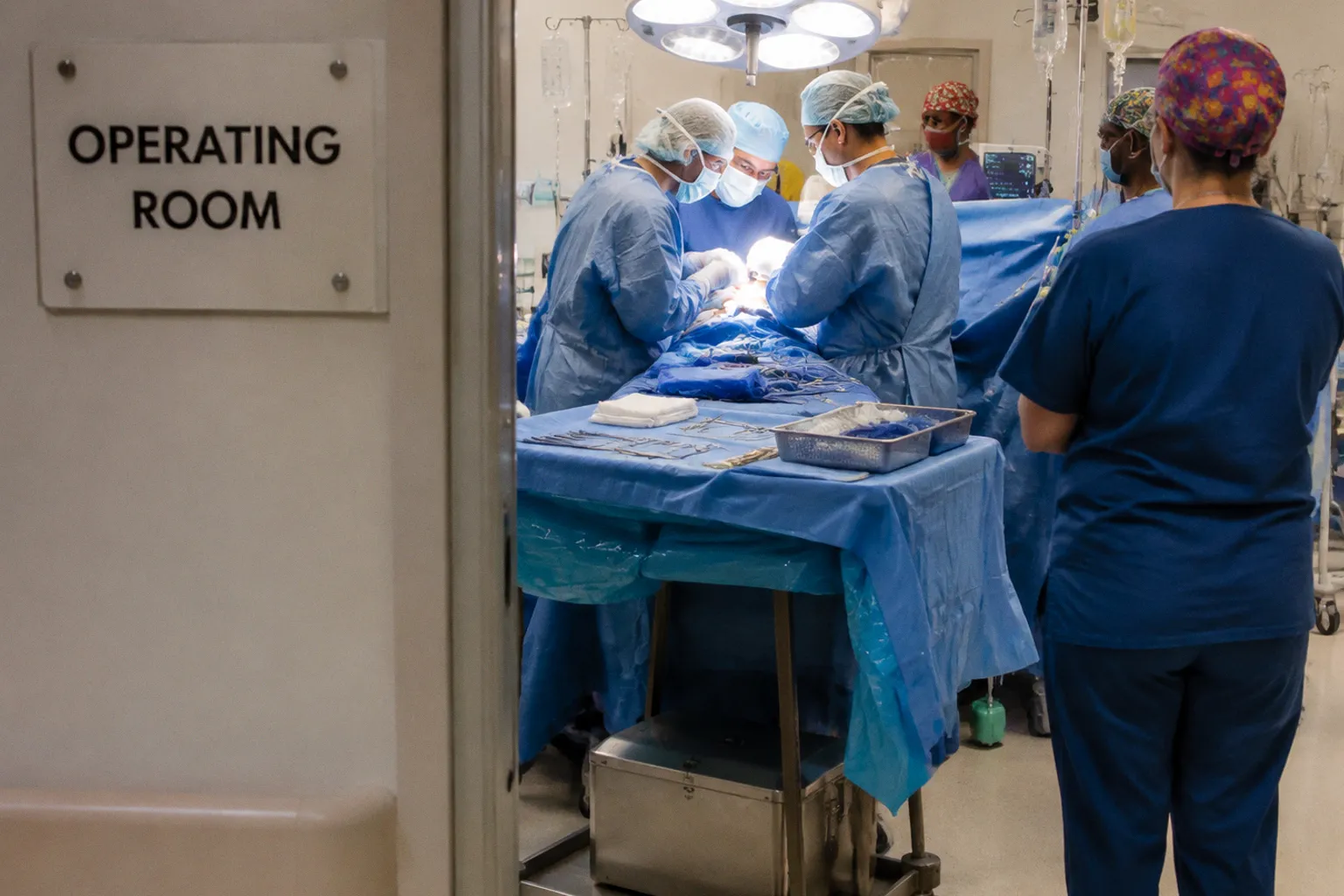
The pre-op visit, imaging, laboratory work, facility charges, surgeon’s fee, anesthesia, and follow-up care may arrive as separate financial obligations, even when the hospital itself has approved charity assistance. For an uninsured household already deciding whether to miss a shift, delay rent, or ask relatives for help, that distinction is not paperwork. It determines whether treatment feels reachable at all.
Mission Health’s financial assistance structure is built around household income and the federal poverty level, or FPL. Patients at or below 200% of the FPL may qualify for a full charity discount on emergency and medically necessary care. Those between 201% and 400% of the FPL may qualify for partial assistance through a sliding scale. The mission hospital surgery subsidy approval process, however, is not a single switch that erases every charge connected with an operation. It is a review of eligibility, medical necessity, documentation, and the bills the hospital is actually able to control.
How the financial assistance tiers work
The first threshold is 200% of the Federal Poverty Level. Under Mission Health’s Medical Debt Mitigation Policy, households within that range may qualify for a full charity discount on emergency and medically necessary care. In practical terms, the qualifying hospital charges may be reduced completely under the charity policy, rather than merely converted into a smaller payment plan.
The next band runs from 201% to 400% of the FPL. Assistance in this range is generally partial and tied to a sliding scale. The household may still owe something, but the amount is assessed against its financial circumstances rather than treated as an ordinary uninsured balance.
These thresholds are not simply labels attached to an account after discharge. They shape the financial review that may happen before a procedure, during an admission, or after charges have been issued. Staff may need to establish household size, income, insurance status, and the nature of the requested care. In a busy hospital office, that means matching documents to a policy while the clinical team is working against a different clock: the patient’s symptoms, the surgical schedule, the available bed, and the risk of delay.
A useful way to understand the tiers is to separate the question of eligibility from the question of coverage:
| Household income range | Potential assistance | What the review still has to establish |
|---|---|---|
| Up to 200% FPL | Full charity discount for qualifying emergency and medically necessary care | Whether the treatment falls within the policy and whether the application supports household income and size |
| 201%–400% FPL | Partial financial assistance on a sliding scale | The applicable discount level, the covered charges, and the patient’s remaining responsibility |
| Above 400% FPL | The documented charity tiers described here may not apply | Whether another hospital assistance option, payment arrangement, or policy provision is available |
| Any income range | No automatic waiver for excluded procedures | Whether the procedure is elective, cosmetic, or a facility-designated self-pay service |
The key phrase throughout the policy framework is medically necessary care. Income alone does not turn every procedure into an eligible service. A patient may meet the household threshold and still face a different determination if the requested treatment is outside the hospital’s charitable-care scope.
A surgery waiver is not a blank check attached to a patient’s name; it is a policy decision tied to income, medical necessity, and the specific charges the hospital controls.
Medical necessity is where many applications change direction
In the financial assistance office, a surgery is not reviewed only as a price. It is also classified by purpose. Emergency care and medically necessary surgical treatment are the central categories supported by the charity discount framework. Procedures performed to address a serious condition, restore function, manage an acute threat, or prevent deterioration may be considered through that lens.
Elective cosmetic procedures sit outside it. Mission Health’s uninsured discount policy excludes elective cosmetic procedures and facility-designated self-pay flat-rate procedures from its managed-care-style discounts. That exclusion matters because the word elective can be misunderstood. It does not necessarily mean a patient is frivolous or that the procedure has no effect on quality of life. It means the service is treated under a different financial category than emergency or medically necessary hospital care.
The same operation may also be described differently by different people. A patient may think of surgery as urgent because pain has made work impossible. A clinician may need to document why the procedure is medically indicated. A financial assistance team may then apply the hospital’s written definitions and exclusions. The approval process lives at the intersection of those accounts.
For patients and families, the practical questions are usually more useful than the labels:
1. What condition is the procedure treating? A clear clinical description helps distinguish medically necessary care from an elective service.
2. What happens if treatment is delayed? The consequences of waiting may be part of the clinical rationale, though the hospital’s policy still governs eligibility.
3. Which part of the proposed care is being reviewed? The operation, inpatient stay, emergency evaluation, imaging, and follow-up may not all be billed in the same way.
4. Is the procedure cosmetic, elective, or a facility-designated self-pay service? If so, the ordinary charity discount may not apply.
5. Has the hospital provided a written estimate or financial assistance application? Verbal expectations are not a substitute for the policy determination.
The language used during pre-op planning can sound clinical and fast-moving: diagnosis, consent, clearance, authorization, scheduling. Financial classification is often happening in the same corridor of work, but with different documents and different consequences. A patient who does not ask how the procedure is categorized may discover the distinction only when an excluded charge arrives.
The nonprofit obligation behind the policy
Mission hospitals do not create financial assistance rules from goodwill alone. Nonprofit hospitals organized under Section 501(c)(3) must maintain written financial assistance policies. Those policies establish who may qualify, how applications are submitted, and how discounts are structured for medically necessary care.
That requirement gives the patient something more solid than an informal promise. The hospital should have a written framework that explains the income thresholds, the application process, and the available discount levels. The policy is the groundwork for a consistent review, even though the lived experience of applying can still be uneven. One patient may arrive with recent tax documents, pay records, and a clear household count. Another may be working irregular shifts, caring for relatives, or living through a sudden loss of income with no neat folder of proof.
This is why the financial review is not merely an administrative pause before surgery. For many households, it is an intervention that can determine whether the care plan proceeds, changes, or stalls. Hospital financial counselors may have to work through incomplete records while the clinical team tries to preserve the treatment schedule. The patient may be answering questions from a registration desk, a nurse, a surgeon’s office, and a billing department, each concerned with a different part of the same episode of care.
A nonprofit policy also helps define the boundaries of hospital assistance. It does not mean that every person receiving care is guaranteed a full waiver. It does not mean that every bill generated during treatment is automatically included. And it does not remove the need for patients to complete the application and provide the requested information.
The strongest approach is to treat the written policy as an operating document rather than a brochure. Read the sections that describe:
- Household income and family-size calculations.
- Full-discount and partial-discount thresholds.
- Emergency and medically necessary services.
- Excluded elective, cosmetic, or flat-rate self-pay procedures.
- Application timing and required documentation.
- Payment plans or limits that may apply to lower-income households.
- The treatment of separate professional bills from independent physicians.
That last point is where many otherwise careful applications become confusing.
The hospital bill may be only one piece of the surgery
A hospital can approve assistance for facility and inpatient surgical charges while separate clinicians continue to bill independently. This may include anesthesiologists, emergency physicians, radiologists, or other non-staff physicians whose services are not billed directly by the hospital.
The patient may therefore receive a letter indicating that a qualifying hospital balance has been reduced, followed by a separate invoice from a physician group. The two documents can appear to contradict each other even when both are accurate. The charity approval applies to the charges covered by the hospital’s policy; it does not automatically forgive every bill associated with the patient’s treatment.
A pre-op financial review should map the episode of care by billing source. Before surgery, the patient or family can ask the hospital financial counselor to identify which charges are expected to come from the facility and which may come from independent professional groups. The hospital may not be able to decide how those outside groups handle their own assistance policies, but knowing the distinction early gives the household time to contact them separately.
This is especially important for surgery because the clinical team works as one unit while the payment system may divide the care into several legal and financial entities. In the operating room, anesthesia is part of the procedure’s practical reality. On the statement, it may be a different account. In the radiology department, an image may guide diagnosis and treatment. On the bill, the interpretation may come from a separate physician group.
The difference is not obvious at the bedside. It becomes obvious at the kitchen table, when several envelopes are opened in the same week.
What to ask before the operation
A short conversation before admission can prevent weeks of uncertainty. Patients do not need to master hospital billing terminology. They need a clear account of who may bill them and which part of the care has been reviewed.
Ask for:
1. A list of expected hospital charges. This may include the facility, inpatient stay, operating-room use, and hospital-employed services.
2. The names or categories of independent physician groups. Anesthesia, emergency medicine, radiology, pathology, or surgical specialists may issue separate bills.
3. Confirmation of the assistance status. Ask whether the application is pending, approved, incomplete, or awaiting additional documents.
4. The discount’s scope. A full or partial charity determination should be understood in relation to covered hospital charges, not assumed to apply universally.
5. The next step if a separate bill arrives. The hospital’s financial counselor may not control that account, but can often clarify whether it belongs to an outside group.
Keep copies of the application, income documents, approval letters, and account numbers. In a long admission, papers can move between registration, financial counseling, clinical departments, and central billing. A patient should not have to reconstruct the entire financial history from memory while recovering from surgery.
Preparing for the pre-op financial review
The best financial review begins before the patient is lying in a pre-op bay with an intravenous line in place. Early preparation does not guarantee approval, but it gives the hospital a workable record and gives the family time to correct missing information.
The application may require proof of household income and the number of people in the household. The exact documents can vary, so the patient should ask the hospital what it accepts rather than assembling a single assumed packet. Income may be straightforward for a salaried worker and harder to document for someone combining hourly shifts, temporary work, self-employment, or irregular support.
A practical file may include:
- Recent income records for household members.
- Documents showing household size.
- Information about insurance coverage or lack of coverage.
- The hospital account number and scheduled procedure details.
- Any written estimate or financial counseling correspondence.
- Notes about which clinicians are employed by the hospital and which may bill independently.
- Copies of every submitted form and later approval or denial notice.
If the household’s income has changed recently, say so clearly and ask how the hospital wants that change documented. A recent job loss, reduced hours, or interruption in work may not fit neatly into older tax records. The policy’s decision will depend on the documentation the hospital accepts, but the financial counselor can explain what is missing and whether the application can be completed while additional records are gathered.
Patients should also ask whether a payment plan is available if the household qualifies for partial help rather than a full charity discount. The research indicates that payment-plan durations may be capped for patients below 300% of the FPL, but the details of a particular account and policy application should be confirmed directly with the hospital. A partial discount is not the same as an unaffordable lump-sum demand; the remaining balance may be handled under a structured arrangement.
The timing matters. If a procedure is scheduled, do not wait until after discharge to ask whether financial assistance is available. A hospital’s financial assistance policy may permit applications at different points, but early contact gives staff more time to review the record and identify gaps. It also gives the patient a better chance to understand the difference between an approved discount and a bill that has not yet been evaluated.
When the approval process does not move in a straight line
Hospital operations rarely follow a clean sequence. A clinical decision may change the expected length of stay. A planned procedure may become urgent. A patient may be discharged before the financial file is complete. A document may be sent to an old address. Each disruption can make the process feel personal, even when the cause is logistical.
The response should be organized rather than reactive. If an application is delayed, ask which specific item is missing, where it should be sent, and whether the hospital can confirm receipt. If a bill appears while the application is under review, contact the financial assistance office and ask whether collection activity can be paused or redirected under the hospital’s process. Do not assume that silence means approval, denial, or cancellation.
If the hospital grants a full or partial discount, read the approval notice closely. Identify the account covered, the services included, the effective period if one is stated, and any remaining balance. Then compare that information with every statement received. A hospital facility bill, an independent anesthesiology statement, and a radiology bill may each require separate follow-up.
There is no single universal timeline for individual surgical waiver decisions in every Mission hospital branch, and approval rates for elective versus non-elective subsidy requests are not established in the available policy information. Patients should therefore avoid relying on informal promises about how quickly an application will be approved or how often a particular kind of request succeeds. The written determination is what matters.
The broader purpose of charity surgical assistance
Financial assistance policies are often discussed as if they were tools for reducing debt after care has already happened. On the ground, they also shape access before treatment begins. A patient who believes surgery is financially impossible may wait longer, return to an emergency department, or live with a condition that steadily narrows work, mobility, and family life. A clear policy cannot remove every barrier, but it can turn an unknown bill into a reviewable decision.
That is the value of the Mission hospital surgery subsidy approval process when it works as intended: it gives hospital staff a defined structure for responding to need, and it gives patients a path that is more concrete than asking for an exception. The 200% FPL threshold establishes the potential route to full charity assistance for qualifying emergency and medically necessary care. The 201%–400% range creates a path toward partial help. The exclusions remind everyone that medical need, procedure type, and billing responsibility still matter.
The most reliable strategy is to begin early, document carefully, and keep the financial map alongside the clinical one. Ask what the hospital controls. Ask what it does not control. Ask whether the procedure is being evaluated as medically necessary care or an excluded elective service. Ask which independent physicians may send their own statements. Then keep the answers in writing.
In a hospital, resilience is often measured in the obvious places: the night shift that keeps moving, the nurse who finds an open bed, the surgical team that makes room for one more emergency. But access also depends on quieter groundwork at a financial counseling desk, where a household’s income is translated into a policy tier and a frightening bill is given a shape that can be addressed. For many patients, that work is not separate from care. It is one of the conditions that makes care possible.