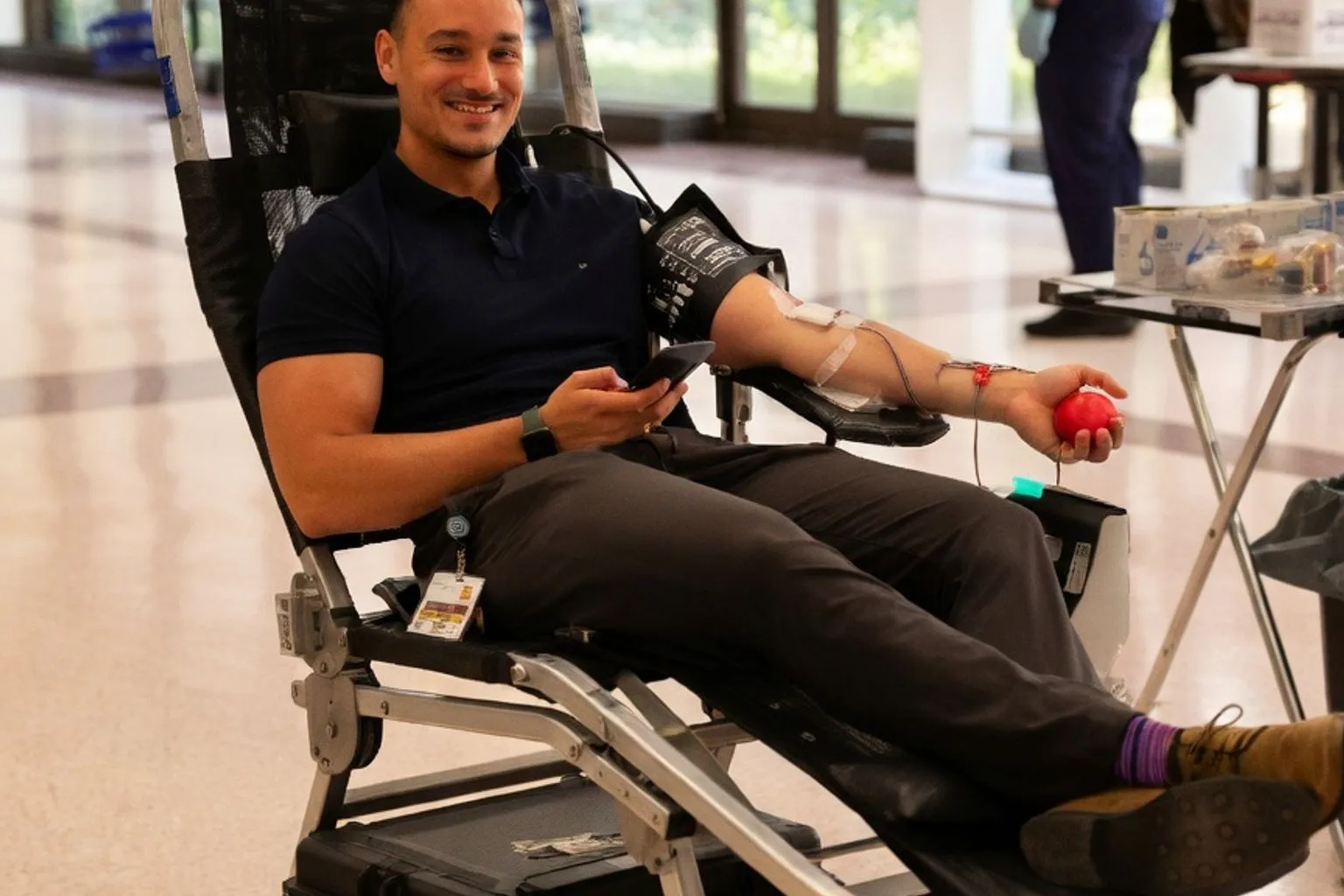
The Positive Community reports that University Hospital in Newark collected 74 pints of blood during an August drive staged with the New York Blood Center — a tidy number that deserves scrutiny against the emergency NYBC had declared just weeks earlier, in July. The arithmetic of that timing tells a familiar story in American healthcare: a declared crisis, a reactive community mobilization, and the unspoken assumption that civic generosity can stand in for structural planning.
Between Emergency Declaration and August Drive
NYBC's urgent second summer blood emergency landed with the regional supply down to a one- to two-day reserve, with Type O-positive and O-negative among the most depleted. The University Hospital drive followed, not preceded, that warning. The collection broke down into 63 whole blood donations, 10 double red blood cell contributions, and a single plasma donation — a mix that tracks with general-purpose trauma and surgical demand rather than targeted replenishment of the rarest types.
Jason Brady, Executive Director of Emergency Medical Services at University Hospital, framed the exercise in terms that blur the line between civic event and clinical infrastructure. "Maintaining an adequate blood supply is essential to providing timely, lifesaving care, both in the hospital and through our growing prehospital blood program," he told the publication. That phrase — "growing prehospital blood program" — is worth pausing on. It signals a system beginning to deliver blood at the scene of injury, which raises the supply floor considerably and makes a one- to two-day regional reserve an even thinner margin than it already was.
What 74 Pints Actually Buys
A single pint typically yields one transfusion unit. Multiply 74 across a Level I Trauma Center — New Jersey's first, per the hospital's own designation — and the figure reads less as a stockpile than as a long weekend's reserve. Bhishma Patel, chief technologist for Transfusion Medicine Services, described donor participation as evidence of a "shared commitment to patient safety, quality and continuous improvement." The language is corporate, and worth decoding: continuous improvement is the opposite of one-day supplies, yet that is precisely the operating environment this drive was patching over.
The incentive layer adds its own quiet commentary. NYBC partnered with the New York Mets to offer all participants vouchers for game tickets — a small token that nonetheless reframes donation as a transactional exchange between a healthcare system and a sports franchise. When a Level I center leans on baseball seats to fill its shelves, the gap between clinical demand and volunteer supply has become difficult to romanticize.
The Question That Outlasts the Drive
University Hospital says staff and community members can watch for information about another drive this October. A roughly two-month cadence is reasonable on paper. It also normalizes episodic collection as a substitute for the standing reserve a trauma center actually requires, and leaves unanswered the more uncomfortable structural question — who, beyond hospital employees and Mets-ticketed donors, is responsible for keeping New Jersey's first trauma center solvent in blood between drives.