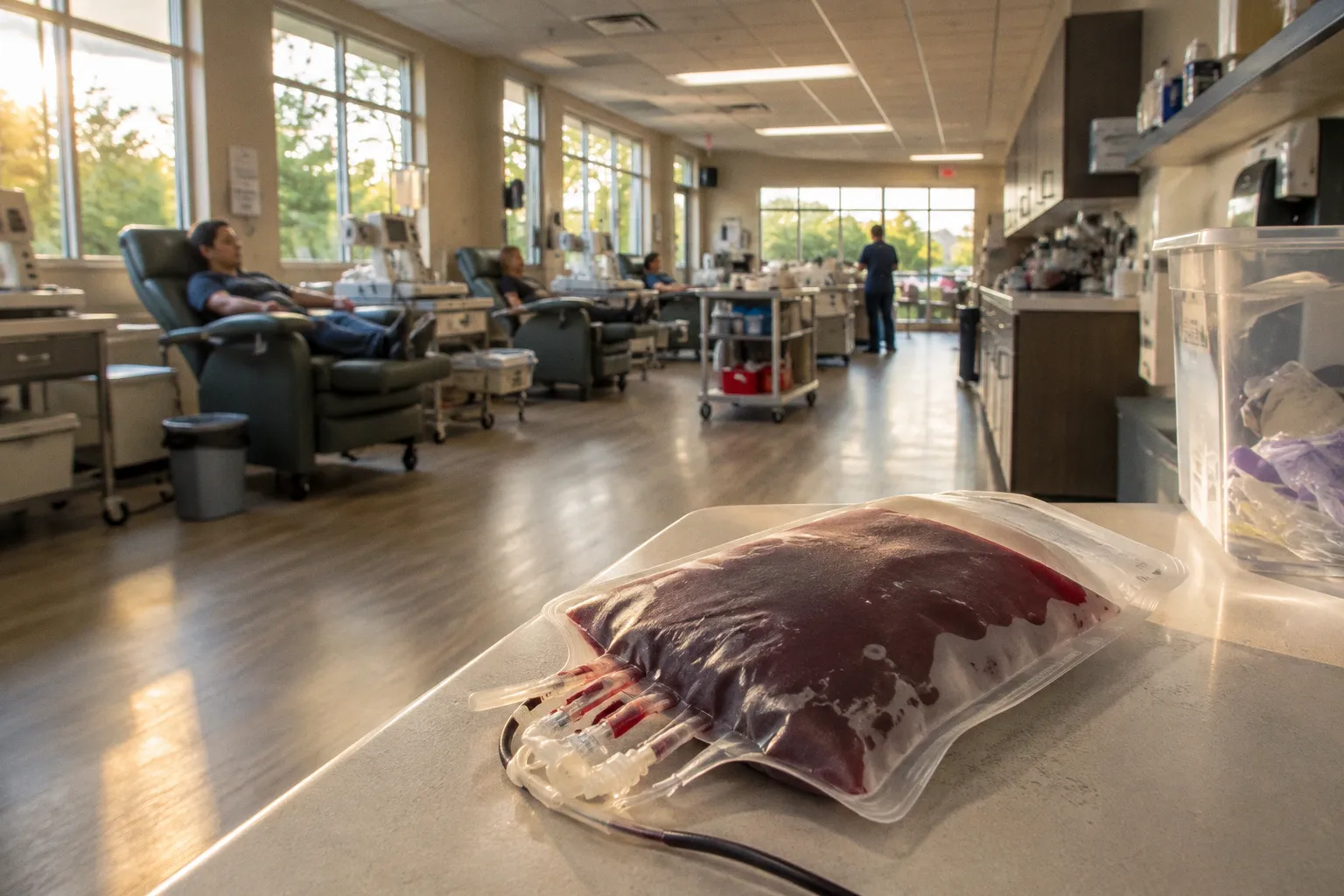
For a patient with leukemia, a complex surgery, or a dangerous bleeding disorder, that rhythm can matter as much as the size of the blood bank’s shelves.
Platelet donation is different from whole blood donation. During plateletpheresis, a machine separates platelets from the donor’s blood and returns most red blood cells and plasma to the donor. The appointment is longer, the preparation is more specific, and the rules around medication, platelet counts, and donation frequency are stricter. Understanding those details makes the process less mysterious—and helps donors arrive ready for a safe, productive shift in the chain of care.
The mechanics of apheresis and donor safety
A platelet donation begins much like any other donation appointment. The donor registers, answers health and medication questions, and goes through a brief screening that may include vital signs and a blood count. The collection team is not simply checking whether a person feels well that morning. They are establishing whether the donor can give platelets without dropping below a safe level and whether the collected product is likely to function properly for a patient.
The key piece of equipment is an apheresis machine. Blood travels from the donor through sterile tubing into the device, where it is separated into its components. Platelets are collected in a designated bag, while most of the red blood cells and plasma return to the donor. That return cycle happens repeatedly during the appointment, which is why platelet donation takes longer than a standard whole blood collection.
The apheresis procedure itself often takes around 90 minutes, but the complete visit can last from approximately 70 minutes to 3 hours. Registration, screening, connection to the machine, collection, disconnection, and recovery all belong in the donor’s schedule. A person rushing from work or trying to fit the appointment into a narrow lunch break may find that the medical procedure is only one part of the time commitment.
The process is designed around two competing needs:
- Collect enough platelets to support hospital transfusion services.
- Return enough blood components to the donor to preserve a safe recovery.
- Confirm that the donor’s platelet count is adequate before collection begins.
- Monitor for reactions during and immediately after the procedure.
Before plateletpheresis starts, the donor’s platelet count must be at least 150,000 platelets per microliter under the cited US regulatory standard. The procedure is intended to leave the donor with a post-donation count no lower than 100,000 platelets per microliter. These thresholds explain why a person who was eligible for whole blood donation on one visit may be deferred from platelet donation on another. Eligibility is not a permanent label. It is a decision made from the donor’s current health information and current blood count.
Some donors notice a cool sensation, mild chills, or tingling around the lips, fingers, or face. This can happen because the machine uses citrate as an anticoagulant while the blood is outside the body. Citrate temporarily binds calcium during the collection process. The sensation is usually mild and can be managed at the donation site, often with oral calcium according to the center’s protocol. It is not evidence of permanent calcium loss, and it should not be ignored or hidden from the collection team. Speaking up early gives staff more options to adjust the procedure and keep the donor comfortable.
Platelet donation is a timed intervention: a longer appointment for the donor, a short-lived product for the hospital, and a narrow window in which every unit must be used well.
Platelet donation frequency and eligibility rules
The most common question is deceptively simple: how often can you donate platelets? The answer depends on the amount collected, the donor’s laboratory results, and the rules used by the blood center. Under the FDA framework described in the research for this article, plateletpheresis may be performed as often as every 7 calendar days after a collection of 6 × 10¹¹ or more platelets, up to a maximum of 24 collections in a rolling 12-month period.
That is a ceiling, not a promise that every donor will be accepted on that schedule. A donation center may apply additional medical or operational requirements. A donor may also need to wait longer if the platelet count, health questionnaire, medication history, or recovery status does not meet the center’s criteria.
The seven-day interval applies specifically to plateletpheresis. It should not be confused with whole blood donation rules. Whole blood donors cannot simply transfer the platelet schedule to another donation type, because the body is losing and replacing different blood components in each procedure.
The research also notes a shorter interval—every 2 days—when fewer than 6 × 10¹¹ platelets are collected. That distinction belongs to the details of the collection and the governing rules, not to casual self-scheduling. Donors should follow the appointment interval provided by their blood center rather than calculating a personal schedule from a general rule.
The practical limits can be summarized this way:
| Donation factor | What the rule means in practice |
|---|---|
| Pre-donation platelet count | At least 150,000 platelets per microliter before plateletpheresis under the cited FDA standard |
| Intended post-donation level | The procedure is structured so the donor remains at or above 100,000 platelets per microliter |
| Standard interval | At least 7 calendar days after collecting 6 × 10¹¹ or more platelets |
| Annual maximum | No more than 24 platelet collections in a rolling 12-month period under the cited FDA rules |
| Shorter interval | A 2-day interval may apply when fewer than 6 × 10¹¹ platelets are collected, subject to center rules |
| Appointment duration | Approximately 70 minutes to 3 hours from registration through recovery |
| Product shelf life | Platelets generally remain usable for only 5 to 7 days after collection |
A donor’s eligibility also involves more than platelet numbers. Blood centers screen for recent illness, medical procedures, travel or exposure history where relevant, and medications that may affect the collected product. The screening process can feel repetitive to regular donors, but the repetition is part of the safety system. A person’s circumstances can change between shifts, even when the donation itself has become familiar.
For regular donors, the most useful habit is to treat every appointment as a fresh clinical assessment. Eat and drink as recommended by the center, report recent medications accurately, and tell staff about any unusual symptoms during a previous donation. The goal is not to pass a test. The goal is to protect the donor while collecting platelets that clinicians can use with confidence.
Preparing for platelet donation
Preparation starts before the donor reaches the blood center. The procedure moves blood through tubing and back into the body over an extended period, so hydration and a settled meal can make the appointment easier to tolerate. Donors are generally advised to drink well beforehand and avoid fatty foods.
The reason for avoiding fatty foods is practical rather than ceremonial. Excess fat in a blood sample can interfere with processing and laboratory assessment, potentially affecting the quality or usability of the donation. A light, familiar meal is often a better choice than arriving hungry or eating something heavy immediately before the appointment.
Medication planning deserves particular attention. Aspirin, ibuprofen, and other non-steroidal anti-inflammatory drugs can impair platelet function. The cited guidance calls for avoiding aspirin and NSAIDs for 48 hours before platelet donation. This is not the same as saying that every pain reliever creates the same deferral period. Paracetamol and acetaminophen should not be treated as though they damage platelets or automatically require a 48-hour wait based on the facts available here.
Medication decisions should still be reported to the donation center. A donor should not stop a prescribed medicine without medical advice simply to qualify for an appointment. The correct next step may be to reschedule, confirm the medication policy with the blood center, or discuss the situation with a clinician. The collection team needs an accurate list, including over-the-counter medicines taken for a headache, muscle pain, inflammation, or a recent illness.
A straightforward preparation routine looks like this:
1. Hydrate during the hours before the appointment. Arriving well hydrated can make the draw and return cycles more comfortable and may help the staff place the needle efficiently.
2. Choose a light meal and avoid fatty foods. Familiar food is preferable to an experiment in nutrition on donation day.
3. Review medications at least 48 hours in advance. Aspirin, ibuprofen, and other NSAIDs may require deferral before platelet donation. If the medication is prescribed, ask a healthcare professional before changing it.
4. Bring enough time for the full visit. The apheresis portion may last around 90 minutes, but the entire appointment can extend to 3 hours.
5. Wear clothing that allows easy access to the arm. This is a small logistical detail, but it matters when the donor is sitting in one position for an extended period.
6. Tell the team about prior reactions. Tingling, chills, nausea, dizziness, or difficulty during an earlier appointment helps staff plan the next collection.
The best preparation is not elaborate. It is consistent groundwork: fluids, food, a medication check, and enough room in the day that the donor does not feel pushed out of the chair before recovery is complete.
Platelet donor recovery time and citrate reactions
Most donors can return to ordinary activity after platelet donation, but recovery is individual. The red blood cells and plasma are largely returned during apheresis, which is one reason platelet donors may be able to donate more frequently than whole blood donors. That does not mean the procedure is physically insignificant. The body still needs to settle after a prolonged collection, and some donors feel tired, light-headed, cold, or mildly uncomfortable for a short period.
The recovery period begins at the donation site. Staff may offer refreshments and ask the donor to remain for observation. This is not administrative padding around the real procedure. It is part of the intervention, especially when the donor has spent a long time connected to the machine and may have experienced citrate-related symptoms.
Tingling or chills should be reported as soon as they begin. Citrate reactions can often be relieved quickly with oral calcium supplements or other measures used by the center. A donor should not try to endure worsening symptoms in silence, and staff should not have to guess whether a person is comfortable. The collection room works best when the donor treats the team as part of the process rather than as people to reassure.
After leaving, a donor may want to keep the rest of the day flexible, particularly after a first appointment. A quiet meal, additional fluids, and avoiding strenuous activity until feeling fully recovered are sensible precautions. The specific aftercare instructions from the blood center take priority because they reflect the donor’s screening results and the details of the collection.
Contact the donation center or seek medical advice if symptoms are severe, persistent, or unusual for that donor. Fainting, significant bleeding from the needle site, chest pain, trouble breathing, or symptoms that worsen rather than settle require prompt attention. Most appointments do not lead to serious complications, but a safe donation system leaves room for the uncommon event instead of assuming every recovery will be identical.
There is also a psychological part of recovery that rarely appears on the appointment form. Regular donors can begin to see themselves as dependable infrastructure—the person who books the next slot, remembers the medication window, and returns when the supply is thin. That sense of responsibility can be powerful, but it should not become pressure to donate when ill or depleted. Resilience in a blood system depends on protecting donors as carefully as protecting recipients.
Why platelet inventories need a continuing donor network
Whole blood can be processed into red cells, plasma, and platelets, but platelet products have a particularly short working life. With a shelf life of only 5 to 7 days after collection, they cannot be stored indefinitely for a distant emergency. The blood bank has to keep the supply moving through the neighborhood and into the hospitals that need it.
This is why a blood donation drive focused only on one large day may not solve the platelet problem. A successful campaign needs follow-up: donor registration, repeat appointments, reminders, medication guidance, transportation planning, and communication with the collection center. The groundwork is quieter than the drive itself, but it is what turns goodwill into a dependable supply.
Platelets are used in settings where bleeding risk is high or platelet counts are dangerously low. Patients receiving intensive cancer treatment may require transfusion support. Surgical teams may need access to compatible products when bleeding is difficult to control. Emergency departments and inpatient units depend on the blood bank’s ability to respond without waiting for a new public appeal each time a shelf begins to thin.
The short shelf life changes the meaning of frequency. A donor who returns at an interval allowed by the center is not merely repeating a charitable act. They are helping maintain a living inventory, one that cannot be built once and then left untouched. The donation schedule has to match the pace of clinical need.
That system also depends on careful matching between donor availability and hospital demand. Blood centers may recruit platelet donors differently from whole blood donors because plateletpheresis takes longer and often requires more predictable scheduling. Some centers may seek donors with specific blood types or ask regular donors to fill appointments during periods when the supply is especially vulnerable. The request can feel more personal because the logistics are more exact.
Still, the network is larger than any one donor. It includes the registration staff who make the appointment possible, the phlebotomists who establish a safe connection, the laboratory teams who test and label the product, the couriers who move it under controlled conditions, and the hospital transfusion service that releases it for a patient. A platelet donation enters that chain at the donor chair and continues through every shift that follows.
The short shelf life of platelets turns generosity into a schedule. The supply survives because donors return before the need becomes visible to the public.
Making the next appointment safely
For someone considering platelet donation for the first time, the most useful question is not only how often they can donate. It is whether they can build a sustainable pattern around the appointment. A donation every seven days may be permitted in a particular circumstance, but the right frequency for an individual depends on the blood center’s assessment, the amount collected, the donor’s counts, and how their body responds.
A regular donor can make the process smoother by keeping a simple personal record:
- The date and type of each donation.
- Any medication taken in the preceding 48 hours.
- Symptoms during or after the appointment.
- The recovery time needed before returning to normal activity.
- The next eligible date provided by the blood center.
This is not a substitute for the center’s records or medical screening. It is a practical memory aid, especially for people who donate several times in a year and have changing work or family schedules.
Before booking, donors can also ask the collection team specific operational questions: how long the center expects the appointment to take, whether a platelet count will be checked on site, what food and drink are recommended, how the center handles citrate symptoms, and which medications require a temporary deferral. Clear answers reduce last-minute cancellations and help donors arrive prepared rather than anxious.
The strongest platelet programs are built on this kind of ordinary reliability. Someone drinks water before a morning shift, checks the label on an over-the-counter medicine, leaves enough time for recovery, and keeps the next appointment instead of waiting for an emergency headline. None of those actions feels dramatic. Together, they form the groundwork of a blood supply that hospitals can trust.
Platelet donation asks for more time and a little more planning than whole blood donation. In return, it offers a direct role in transfusion care, especially for patients whose treatment or condition has left them unable to maintain a safe platelet count. The rules—150,000 platelets per microliter before collection, a possible seven-day interval, a maximum of 24 collections in a rolling year, and a 48-hour deferral for aspirin and NSAIDs—are not hurdles placed between a donor and a good intention. They are the guardrails that let the intervention continue.
A hospital’s resilience is rarely visible from the outside. It is measured in units ready on the shelf, staff prepared for the next call, and donors who understand that care is sustained one appointment at a time.