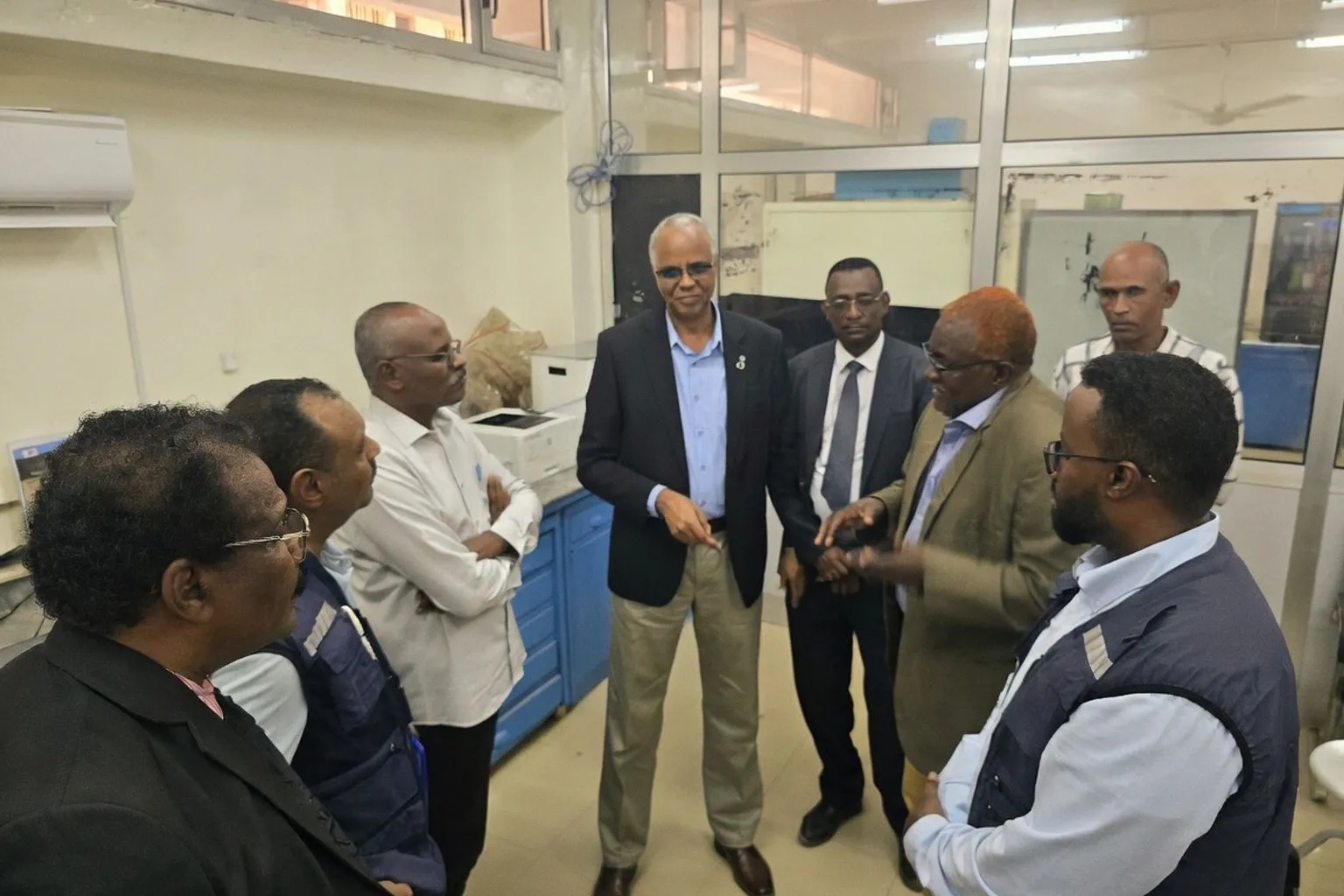
According to the WHO Regional Office for the Eastern Mediterranean, WHO Representative Dr Abdinasir Abubakar arrived at the facility and the nearby National Public Health Laboratory to take stock — to walk the floors, listen to the directors, and see what recovery actually looks like when the cameras have moved on.
What the visit revealed
Inside the National Public Health Laboratory, a facility that sustained extensive damage during the conflict, Director Professor Mubarak Elsaeed Elkarsani walked the WHO delegation through the painstaking groundwork of rebuilding. WHO has supplied laboratory equipment, essential consumables, and hands-on capacity-building for the personnel who keep diagnostics running. Dr Abdinasir was direct about the work still ahead: the facility must be fully restored and operational, and the nationwide network of public health laboratories needs sustained investment to safeguard the gains already made.
The blood transfusion side of the visit carried its own quiet weight. Director Dr Issam El-Din Hassan Ali briefed the delegation on a remarkable shift in how the country moves blood: the system, once centralized and strained, has been decentralized — and now operates in every state. That result was not abstract. It rests on practical, unglamorous work — investment in supplies, transportation, cold-chain systems, and the rehabilitation of offices and service points where donors are received and blood is processed.
Why it matters beyond Khartoum
For neighborhoods across Sudan, the difference between a functional blood service and a broken one is measured in the space between an emergency and its outcome. Safe, accessible transfusion is the kind of intervention that rarely draws attention until it is missing. Dr Abdinasir framed the rebuilding as essential to strengthening the wider health system and reaffirmed WHO's continued support through two funding channels: the World Bank Group's Sudan Health Assistance and Response to Emergency, and the African Development Bank's Sudan Health Emergency and Infrastructure Project.
The visit closes a loop that began with conflict and continues, shift by shift, in the patient rhythms of recovery. Restoring a national reference laboratory and rebuilding a country-wide blood network are not headline-grabbing interventions. But they are the ones that decide whether the next outbreak is caught early — and whether the next patient who needs blood actually receives it.