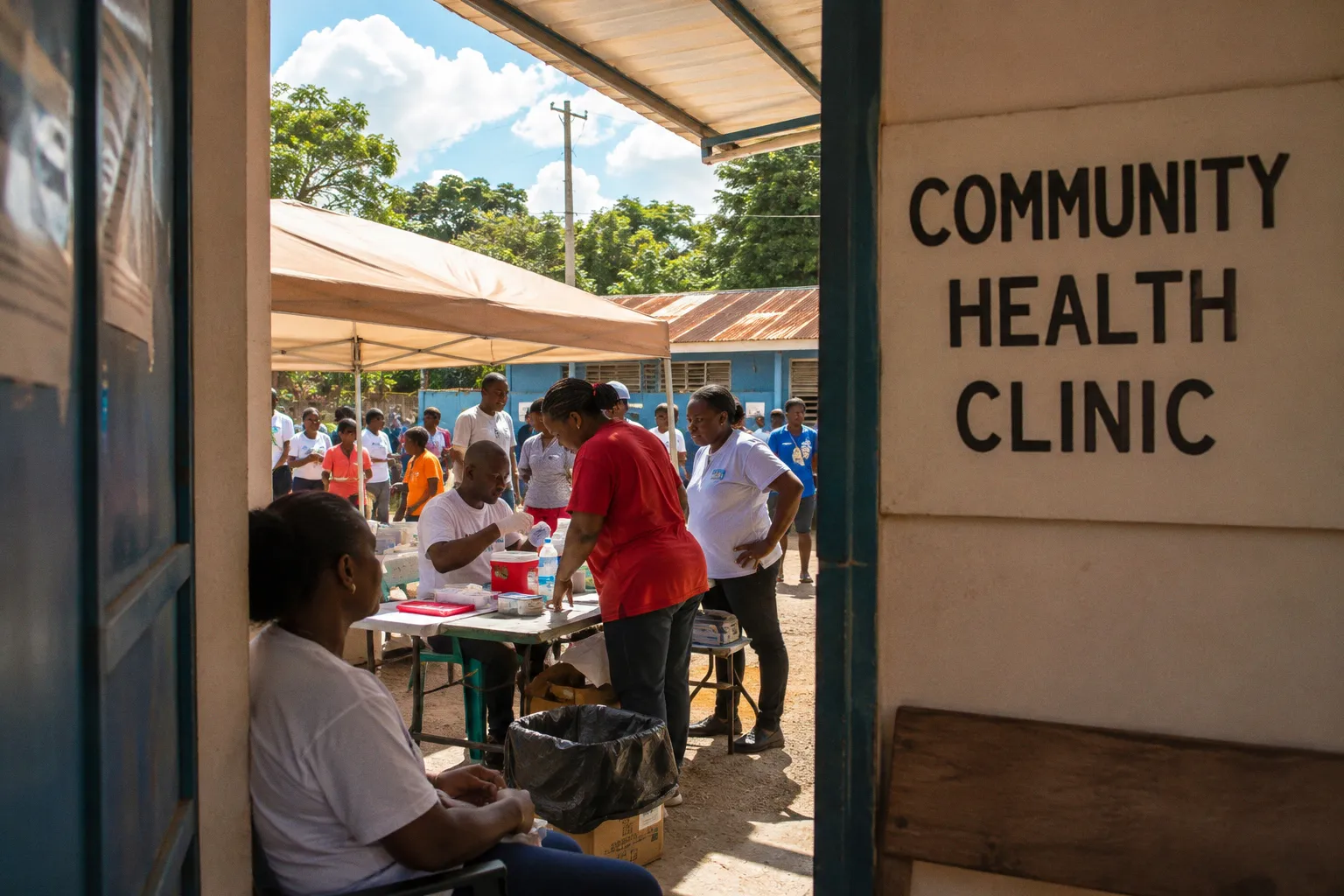
In a public health emergency, the first request for help often surfaces in a neighborhood long before the wider health system can respond. The World Health Organization is calling for community health workers, volunteers, and community-based organizations to be treated as part of the permanent public health workforce—not as a reserve activated only when a crisis arrives. For charitable hospitals, outreach teams, and patients who rely on local support, that shift puts the groundwork of care in clear view: trusted relationships, working referral links, and resources that are in place before the next emergency.
The infrastructure before the emergency
The WHO’s fourth Annual Regional Forum on Community Engagement and Resilience, held in Colombo from August 26 to 28, focused on how community health workers can support localized emergency management and strengthen health-system resilience. Representatives from health ministries, WHO, UNICEF, the International Federation of Red Cross and Red Crescent Societies, the World Bank, and other partners took part.
The central point was practical. Community workers understand local conditions and already have relationships that can help connect people with essential services. They can support public health interventions at the grassroots level, including while formal systems are still mobilizing.
But the forum also emphasized that goodwill and short-term training are not enough. For community roles to function consistently, health systems need clear responsibilities, links to primary care and emergency-management structures, information that moves in both directions, and mechanisms for supervision and accountability. The WHO also identified policy, governance, sustainable financing, workforce planning, competency frameworks, training systems, and information infrastructure as part of that institutional groundwork.
For a patient, these arrangements may be invisible until they fail. A referral that does not reach the right service, an outreach worker without current information, or a volunteer brought into an emergency without a defined role can turn a local response into a series of delays. The forum’s message was that resilience is built through ordinary systems and relationships, not improvised at the moment of greatest pressure.
Blood donation depends on belonging
The same principle is visible in blood-donation outreach, where trust and community connection can determine whether a campaign reaches the people it needs.
NHS Blood and Transplant worked with the grassroots organization Bloodlines during the Big Half marathon in London to mobilize blood donations among Black heritage communities. According to the reported details, the effort is aimed at addressing chronic shortfalls in matched Ro subtype blood needed to treat people living with sickle cell disorder.
The campaign links a major public event with a specific community health need. It is not simply a request for more donors in the abstract; it is an effort to reach communities whose participation is important to the availability of appropriately matched blood. For hospitals and patients, that makes the design of outreach part of the intervention itself—who is approached, through which trusted networks, and whether the invitation feels connected to the realities of the neighborhood.
Other reported community-health efforts include Wheeling Health Right’s September Community Care Drive, which is seeking donations, and a fundraiser hosted by St. Clair Community Health Clinic. The available reports do not provide further details about the funds sought, the services involved, or the expected beneficiaries, so their significance should be read cautiously.
What charitable hospitals should watch
The WHO forum offers a useful test for community programs: are they connected to routine care, or are they being asked to appear only during a crisis? A durable program needs more than willing hands. It needs defined roles, reliable support, sustainable investment, and a clear path into primary care and emergency structures.
That matters for charitable hospitals in particular, where outreach, donations, volunteers, and frontline clinical services often meet in the same narrow corridor. Blood drives and community fundraisers can provide immediate support, but the broader lesson is slower and more demanding: local resilience requires continuity.
The work begins before the sirens, before the waiting room fills, and before a hospital has to search for help. Community systems are strongest when the people who know the neighborhood are supported as part of care every day—not remembered only when the pressure becomes impossible to ignore.