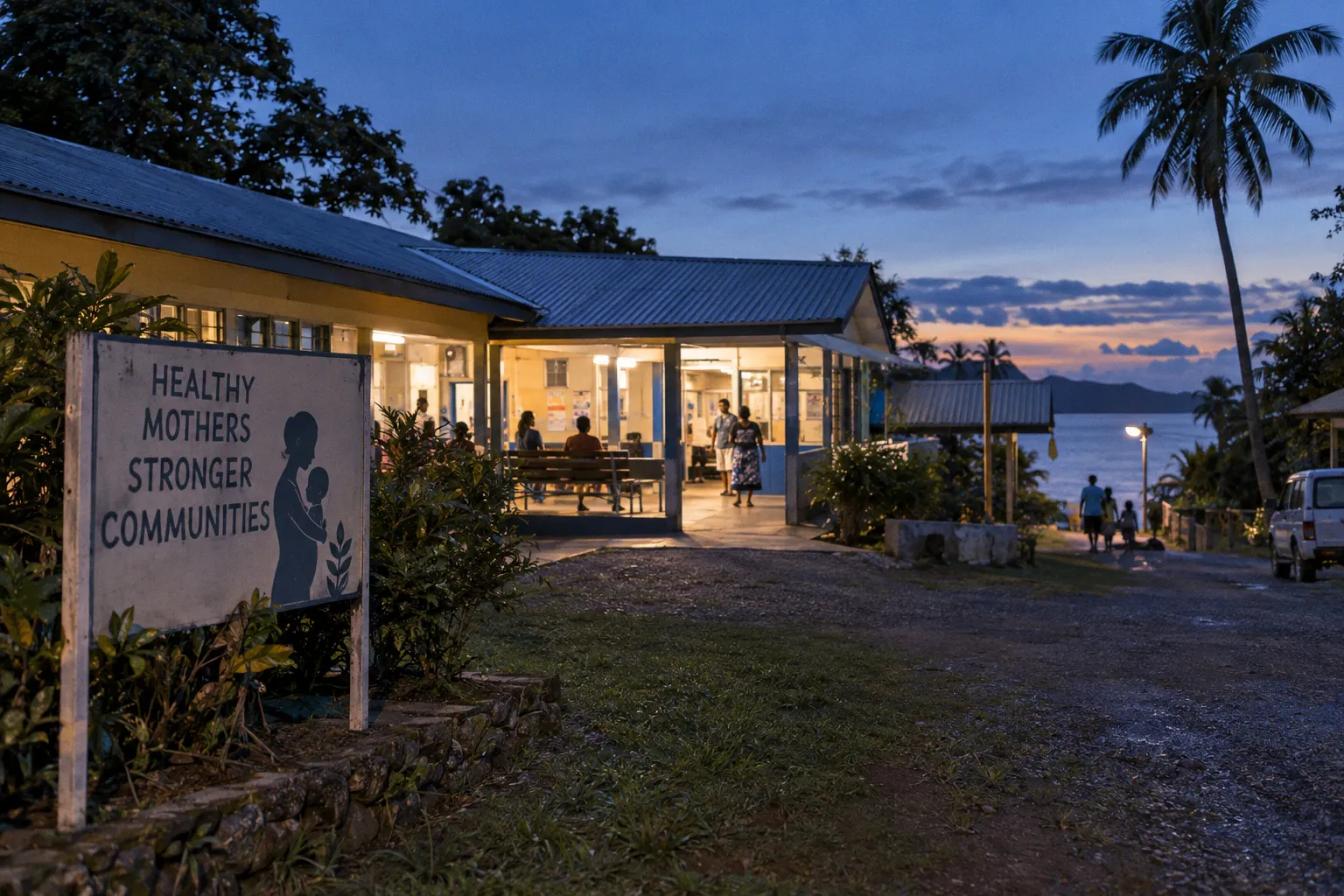
The announcement is significant for rural and preventive health because it places workforce education and clinical infrastructure in the same policy frame. However, the available information does not specify participating institutions, funding levels, implementation dates, enrollment targets, or the number of facilities covered.
The confirmed scope remains limited
The WHO’s published item identifies the initiative as a partnership focused on nursing education and health care in the Solomon Islands. No further operational detail is available in the evidence provided. That limits what can be concluded about its immediate effect on hospital capacity, emergency protocols, outpatient access, or community-based services.
The central issue is therefore resource allocation. A partnership announcement does not, by itself, establish that new nurses have entered the workforce, that training facilities have expanded, or that patient utilization rates have changed. Those outcomes would require documented implementation measures and follow-up reporting.
For patients and communities, the practical distinction is important. Education reform may affect the future supply and distribution of health workers, but the available material does not confirm changes to current appointment availability, referral pathways, blood donation services, or charitable care.
Related funding signals, but no direct link established
A separate announcement from the Partnership for Maternal, Newborn and Child Health concerns the launch of GFF × CIVIC VOICES and a new funding opportunity for local civil society and youth-led organizations. The source identifies PATH, the African Institute for Development Policy, and the Organisation of African Youth as participants in that launch.
The evidence does not establish that this funding opportunity is part of the Solomon Islands nursing partnership. It should therefore be treated as a separate development rather than as confirmed financing for the health-care initiative.
That distinction matters for accountability. A credible assessment of the Solomon Islands program would require a clear funding structure, the identity of local and cross-border partners, and defined responsibilities for training, supervision, accreditation, and service delivery. None of those details is confirmed here.
What health systems should track next
The next useful indicators are implementation documents rather than additional announcements. These would include the institutions responsible for nursing education, the planned training capacity, the location of participating facilities, and the mechanism for retaining or deploying graduates. Without such information, the scale of the intervention cannot be measured.
KFF has separately published an analysis of fourteen international organizations, but the available evidence does not connect that analysis to the Solomon Islands partnership or provide additional facts about the initiative.
The immediate conclusion is constrained but clear: the WHO announcement signals an intended investment in nursing education and health care, not a verified increase in clinical capacity. Its effect on rural access will depend on whether the partnership produces durable training infrastructure, a measurable workforce pipeline, and transparent reporting on implementation.