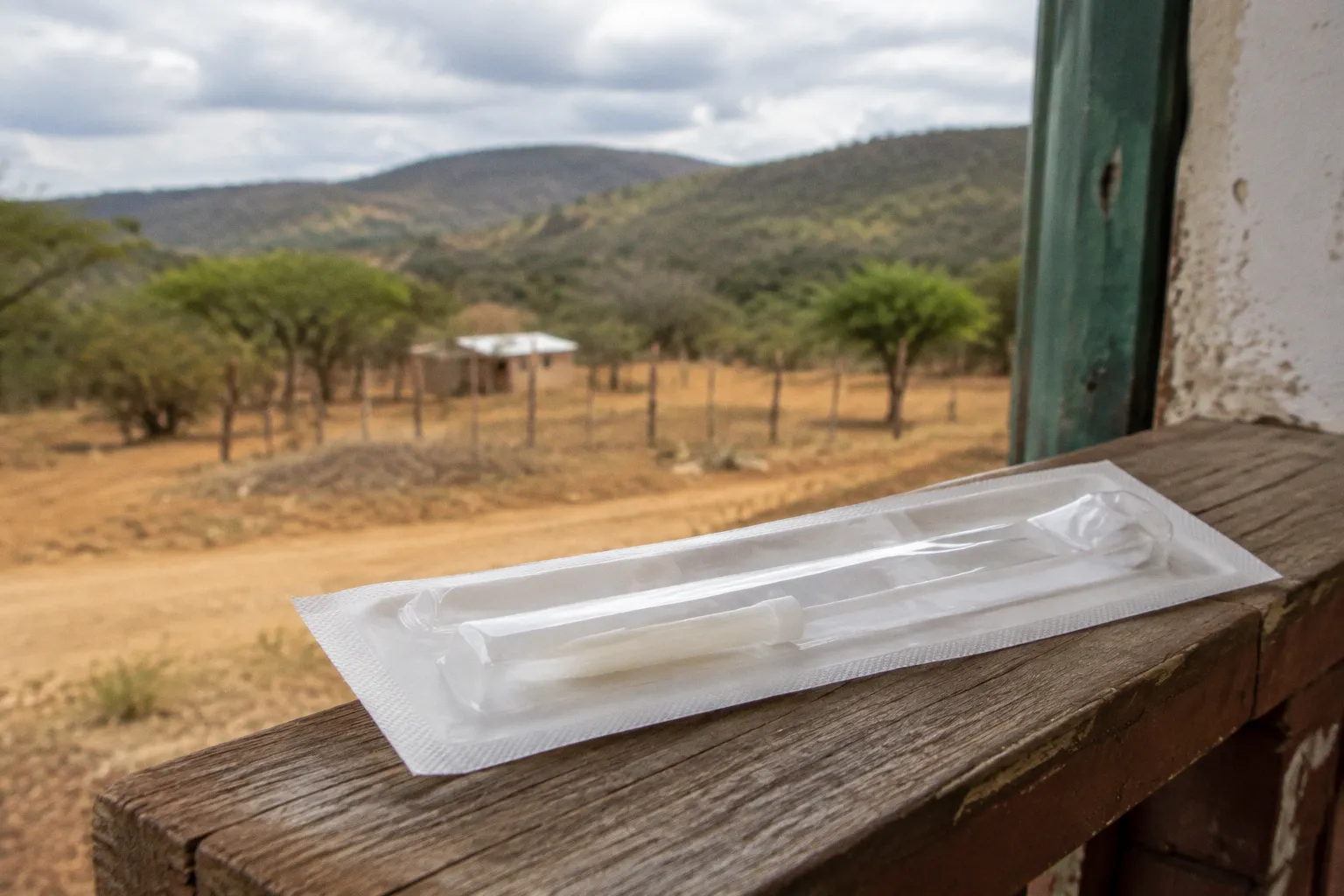
Screening can identify high-risk human papillomavirus (HPV) and detect precancerous changes before they become invasive cancer. Yet access remains uneven, particularly in rural and underserved communities where a screening appointment may require a long journey, lost wages, childcare, and a level of privacy that some clinics cannot provide.
The World Health Organization has set a target of 70% global cervical cancer screening coverage by 2030. That target is not simply a measure of ambition. It also exposes the scale of the gap. In many rural areas across sub-Saharan Africa, Southeast Asia, and parts of the American South, screening remains limited, irregular, or dependent on temporary outreach campaigns. The question is no longer whether HPV testing works. The more difficult question is whether self-sampling can make screening practical for people whom clinic-based programs have consistently missed.
Self-sampling means that a woman collects her own vaginal swab, either at home or in a private space at a clinic, pharmacy, or community health setting. The sample is then sent for laboratory analysis. The idea is simple. The health-system problem it is meant to address is not.
The Diagnostic Accuracy of Self-Collected HPV Swabs
The biological premise behind HPV self-sampling is well established. Persistent infection with high-risk HPV types causes virtually all cervical cancers. Detecting those infections before cancer develops creates an opportunity for triage, diagnostic assessment, and treatment of precancerous disease.
A self-collected vaginal swab does not require a speculum examination or a clinician to collect cells directly from the cervix. It collects material from the vagina that may contain HPV DNA or RNA shed from the cervix. When the sample is processed using an appropriate molecular assay, the result can be sufficiently accurate for screening purposes.
Across clinical studies and systematic reviews involving tens of thousands of participants, PCR-based HPV testing on self-collected samples has shown diagnostic performance comparable to clinician-collected samples for detecting clinically important precancerous lesions. The relevant endpoint is usually CIN2+, meaning cervical intraepithelial neoplasia grade 2 or worse. These are lesions that may require closer assessment or treatment because they carry a meaningful risk of progressing.
That finding changes the practical role of the screening encounter. A clinician does not necessarily need to be present for the first sample to be collected. The clinical expertise remains essential, but it can be concentrated at the stages where it makes the greatest difference: interpreting positive results, performing diagnostic assessment, and treating disease.
The qualification is important, however. Not every HPV test has the same performance characteristics when used with a self-collected vaginal sample. The strongest evidence is associated with nucleic acid amplification tests, including PCR-based assays. Older signal-amplification methods have generally shown lower sensitivity in self-collected specimens. A self-sampling program therefore cannot be evaluated by looking only at the swab or the instructions supplied with it.
The complete chain includes:
- the collection device and the instructions given to the patient;
- the transport conditions and time before the specimen reaches the laboratory;
- the HPV assay used to process the sample;
- the way positive results are triaged;
- the availability of diagnostic assessment and treatment.
A technically accurate test can still produce weak public-health results if samples are lost, results are not communicated, or patients cannot reach the next stage of care. In rural cervical cancer prevention, laboratory quality is necessary but not sufficient.
The precision of a self-collected swab is not the central uncertainty. The harder question is whether the health system can carry a positive result all the way to treatment.
Self-sampling also needs to be distinguished from visual inspection methods and cytology. It is not a miniature version of a Pap test, and it does not independently show whether a lesion is present. It identifies high-risk HPV. A positive result is a risk signal that requires a defined clinical response.
That distinction matters for communication. If self-sampling is presented as a complete test that settles the question of cervical health, women may misunderstand a negative result, while a positive result may cause unnecessary fear. A responsible program explains what the sample can detect, what it cannot detect, and what will happen next.
Regulatory Shifts and the Move Toward Clinic-Based Self-Testing
Regulation has begun to recognize the value of self-collection, but it has not removed every practical barrier.
In May 2024, the US Food and Drug Administration expanded approvals for two major HPV diagnostic platforms, BD’s Onclarity HPV assay and Roche’s cobas HPV test, to allow self-collection of vaginal swab samples. The authorization was not a blanket approval for over-the-counter home kits purchased and used without a healthcare connection. It applies to self-collection in healthcare settings such as clinics, urgent care facilities, and pharmacies.
That distinction is easy to lose in public discussion. A patient may collect the sample herself, but the process still takes place within a regulated clinical pathway. The healthcare setting may provide the kit, explain the instructions, register the patient, send the specimen to a laboratory, and make sure that a positive result does not disappear into an electronic record no one checks.
For rural communities, this model is both a step forward and an incomplete solution. It removes the pelvic examination from the initial encounter, but it does not remove the need to travel to a recognized healthcare site. If the nearest participating clinic is far away, or if it operates only during working hours, the practical barrier may remain substantial.
The United Kingdom moved toward a wider policy framework in June 2025, when the UK National Screening Committee recommended HPV self-testing as a screening option for under-screened individuals. The recommendation signals a clear intention to reach people who have not engaged with existing screening arrangements, although the operational details of delivery and follow-up continue to matter more than the wording of the recommendation itself.
The Netherlands introduced self-collection into its national primary HPV screening program in 2017. As of the September 2026 reference point for this article, that represents a track record since 2017, or roughly nine years—not seven. Its experience offers an important proof of concept, but not a universal template. A system with established screening registers, laboratory networks, postal infrastructure, and routine patient communication has advantages that may not exist in a rural district hospital or a remote community clinic.
| Jurisdiction or framework | Self-sampling status | Practical limitation |
|---|---|---|
| United States | FDA approvals in May 2024 for BD Onclarity and Roche cobas self-collection use | Collection must take place in a healthcare setting rather than through an unrestricted at-home mail-in model |
| United Kingdom | UK NSC recommendation in June 2025 for under-screened populations | Delivery arrangements, implementation capacity, and follow-up pathways remain decisive |
| Netherlands | Self-collection integrated into national HPV screening since 2017 | Its roughly nine-year track record reflects infrastructure that may not be available elsewhere |
| WHO framework | Self-sampling recognized as an additional approach to cervical screening | The 70% global coverage target for 2030 remains difficult for many rural systems to reach |
The regulatory direction is clear: the patient can take a more active role in specimen collection. The unresolved issue is whether governments and providers will invest in the rest of the pathway with the same seriousness.
Overcoming Barriers to Screening in Underserved Populations
The strongest argument for HPV self-sampling is not convenience in the abstract. It is the possibility of removing several specific barriers at once.
A rural screening appointment can involve transport costs, time away from work, childcare arrangements, concerns about confidentiality, and discomfort with a pelvic examination. In some settings, a woman may also have to navigate a health facility where staff are overstretched and privacy is limited. None of these obstacles is individually impossible. Together, they can make screening feel unavailable.
The evidence from rural Kenya illustrates the difference between willingness and access. In one mixed-methods study involving 174 surveyed women, only 6.4% had ever been screened for cervical cancer. When self-collection was offered as an option, 76.9% said they would be willing to perform it.
Those figures should not be read as proof that every woman who expresses willingness will complete screening. Intent does not automatically become a usable sample, a laboratory result, or a treatment appointment. But the gap does show that low screening coverage cannot be explained simply by a lack of interest. Many women may be willing to screen if the process is private, understandable, affordable, and available close to where they live.
A systematic review covering 72 studies and more than 52,000 participants across countries and income levels reached a similar broad conclusion: HPV self-sampling is generally acceptable. The most common concern was not the act of collecting the sample itself. It was uncertainty about whether the sample had been collected correctly.
That concern is easy to dismiss and unwise to ignore. A woman who doubts her sample may be less likely to return a kit, may seek repeated reassurance, or may assume that an unclear result means she has done something wrong. Clear instructions are therefore part of the clinical intervention, not an accessory to it.
Effective programs tend to make the process concrete. They explain where the swab goes without using unnecessarily technical language, show how far it needs to be inserted, describe how the sample should be placed in its container, and state what happens after it is returned. Demonstration materials, trained community health workers, and opportunities to ask questions can be particularly important where previous contact with cervical screening has been limited.
Delivery models matter as much as the test
There is no single rural self-sampling model. The appropriate design depends on the local health system, laboratory access, transport network, staffing, and the level of trust between communities and providers.
Possible approaches include:
1. Clinic-based self-collection. The patient collects the sample in a private room while staff remain available to explain the process, label the specimen, and arrange follow-up. This model fits current regulatory requirements in the United States and can be introduced without building a completely separate distribution network.
2. Community health worker distribution. Trained workers provide kits, explain collection, record contact details, and return specimens through an established transport route. This can bring screening closer to remote households, but the program must protect confidentiality and maintain reliable specimen tracking.
3. Outreach sessions linked to existing services. Self-sampling can be offered during maternal health visits, immunization campaigns, HIV services, mobile clinics, or other community health activities. The advantage is that it uses a trusted point of contact rather than asking patients to make a separate journey.
4. Pharmacy or local health-point collection. In areas with accessible pharmacies or small health facilities, these sites can provide a private location for collection and a practical handoff to the laboratory system. The model still depends on staff training, regulated testing, and a clear response to positive results.
5. Mail-based programs where permitted. Mailing kits can reduce travel further, but it shifts responsibility to postal delivery, sample return, reminders, result communication, and referral coordination. It is not automatically the simplest option in regions with unreliable addresses or transport systems.
Each model has a failure point. Clinic-based programs may not reach people who avoid clinics. Community distribution may struggle with specimen transport. Outreach campaigns may produce one-time coverage without repeat screening. Mail-based systems may lose contact with patients after a positive result. The point is not to select the most modern-looking model. It is to match the model to the actual route a sample and a patient must travel.
The Critical Link Between Self-Testing and Clinical Follow-Up
This is where the optimistic narrative around self-sampling becomes more complicated.
A positive HPV self-test is not a diagnosis of cervical cancer. It is an indication that further assessment is needed. Depending on the screening protocol, that may involve triage testing, a clinician examination, colposcopy, biopsy, or treatment for a precancerous lesion.
For a woman in a remote village, the positive result can reintroduce every obstacle that self-sampling was meant to reduce. The next service may be several hours away. Transport may be expensive or irregular. The appointment may require time away from work or family responsibilities. In many rural areas, colposcopy and biopsy are not available locally at all.
This creates a two-part problem. First, the health system must communicate the result in a way the patient understands. Second, it must provide a realistic route to care. A message instructing someone to attend a distant specialist clinic is not a follow-up system if there is no transport, referral coordination, or appointment support behind it.
The most useful follow-up pathways make responsibilities explicit:
- who reviews the laboratory result;
- who contacts the patient;
- how the result is explained;
- where the patient is referred;
- whether transport or appointment navigation is available;
- how missed appointments are identified;
- what happens when the patient cannot be reached.
These details are not administrative decoration. They determine whether screening prevents cancer or merely documents risk.
A positive HPV result is only the beginning of care. Without a reliable route to assessment and treatment, self-sampling moves the point of detection but not necessarily the point of survival.
The weakness of follow-up evidence is especially important in remote rural settings without local colposcopy services. Long-term adherence after a positive self-collected sample has not been adequately studied across all of these environments. That is a major implementation question, not a minor research gap.
There is also a danger in measuring success too narrowly. A program may report the number of kits distributed or the number of samples returned. Those figures can show that the first step is functioning. They do not show whether women with positive results completed diagnostic assessment or received treatment when needed.
For rural cervical cancer prevention, the meaningful outcome is not uptake alone. It is the proportion of women who move through the entire care pathway in time for intervention to matter.
Building a Rural Screening Program Around the Whole Pathway
Self-sampling is often described as a way to reduce dependence on clinicians. That is true only at the collection stage. It should not be mistaken for a low-resource substitute for clinical care.
A functioning program needs at least four forms of capacity.
Laboratory capacity
Samples must be transported, stored, processed, and reported reliably. Rural programs may face long distances between collection sites and laboratories, limited courier schedules, power interruptions, or shortages of trained laboratory staff. The more dispersed the collection network, the more carefully the transport system must be designed.
Communication capacity
A result that remains in the laboratory information system has no benefit for the patient. Programs need accurate contact information, language-appropriate communication, and a method for explaining both negative and positive findings. Privacy is especially important in small communities where health information can travel informally.
Referral and treatment capacity
Positive results require a documented clinical pathway. That may mean strengthening district-level services, arranging referral links with regional hospitals, adding mobile diagnostic visits, or coordinating transport. Screening expansion without treatment capacity can create a larger queue of unresolved risk.
Continuity capacity
Cervical cancer screening is not a one-time campaign. HPV infection and precancerous disease require programs that can invite people back, retain records, and maintain follow-up over time. A temporary outreach event may produce impressive attendance but weak continuity if no system exists for future screening and management.
This is why rural preventive health cannot be reduced to the distribution of a diagnostic device. The swab is visible and easy to count. The less visible work—record keeping, transport, referral navigation, quality control, and patient communication—is what determines whether the device changes outcomes.
Global Progress Toward the 2030 Cervical Cancer Elimination Goal
The WHO’s 70% screening coverage target by 2030 is best understood as a challenge to the design of health systems. Reaching it will require more than increasing the number of HPV tests. It will require screening models that can operate beyond the walls of specialist clinics and connect rural communities to timely treatment.
Self-sampling is likely to be an important part of that redesign. It can reduce the need for a clinician to perform every initial collection. It can offer privacy to women who avoid pelvic examinations. It can be integrated into community health worker programs, pharmacy-based services, mobile outreach, and, where regulation and infrastructure allow, mail-based delivery.
The diagnostic evidence is strong enough to support that expansion when appropriate molecular assays are used. Acceptance is also not the main obstacle. The evidence from underserved communities suggests that many women are willing to collect their own samples when the process is explained and made accessible.
The difficult work begins after collection.
A rural screening strategy should be judged by questions such as:
- Can the local system reach women who have not previously attended screening?
- Can it return a result within a clinically useful time?
- Can it identify and contact women with positive results?
- Can those women reach diagnostic assessment without unacceptable cost or delay?
- Can precancerous lesions be treated when treatment is still most effective?
- Can the program maintain records and invite women back?
The Netherlands’ track record since 2017—roughly nine years as of the September 2026 reference point—shows that self-collection can be integrated into a national screening program. The United States and United Kingdom have also moved toward broader acceptance, although their regulatory and implementation models differ. These developments are important, but they do not eliminate the need to adapt delivery systems to local realities.
A well-resourced national screening program and a rural district hospital in sub-Saharan Africa do not begin with the same laboratory network, staffing model, transport infrastructure, or referral capacity. Nor does a remote clinic in the Kenyan highlands face the same constraints as a pharmacy-based service in a high-income country. The technology may be shared. The implementation cannot simply be copied.
The central question, then, is not whether HPV self-sampling works. Under the right testing conditions, it does. The question is whether health systems will treat it as the first link in a complete prevention pathway rather than as a cheap substitute for one.
Self-sampling can bring screening closer to women who have been excluded by distance, cost, privacy concerns, and clinic dependence. But its success will be measured beyond the returned swab. It will be measured in the women who receive a result, reach follow-up, receive treatment when necessary, and remain protected from a disease that should no longer be taking so many lives.